

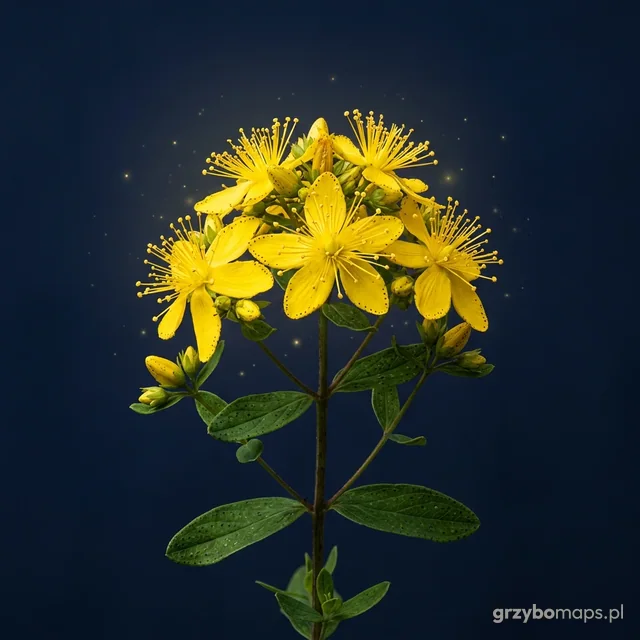
St John's wort
Hypericum perforatum L.
Polish folk names: ziele świętojańskie, ziele Świętego Jana, krzyżowe ziele, ruta polna, przestrzelon, dzwonki Panny Marii
Traditional use
Standardised extracts (pharmacy medicines): well-established use (EMA/HMPC) in mild to moderate depression – in a Cochrane review more effective than placebo and similar to antidepressants. Tea and oil: traditionally for temporary mental exhaustion, mild gastrointestinal complaints and anxiety that makes it hard to fall asleep; externally for minor skin inflammations and minor wounds.
What it looks like
Leaves opposite, sessile, elliptic, with translucent ‘holes’ (oil glands) when held against the light. Flowers yellow, 5-petalled, with black dots along the edges and a bundle of numerous stamens, in cymes.
Harvest
Gathered: herb (tops of flowering shoots).
When: June – August.
Form: infusion, oil maceration (St John's oil), tincture.
Lookalikes
- other St John's wort species (e.g. square-stemmed) – recognisable by the stem with two ridges and translucent dots on the leaves
The information is educational and describes traditional use according to EMA/HMPC monographs (the European Medicines Agency and its Committee on Herbal Medicinal Products).It does not replace the advice of a doctor or pharmacist. Never eat a plant you are not 100% sure you recognise.