

Tamarind
Tamarindus indica L.
Polish folk names: tamarynd, daktyl indyjski, imli
Traditional use
The sour tamarind pulp is a spice and a drink from Senegal to Thailand: it goes into curries, chutneys and Worcestershire sauce. [TRADITION] In Arabic medicine, Ayurveda and West Africa, a drink made from the pulp is given as a mild laxative and as a cooling remedy for fever. The pulp contains tartaric acid and plenty of fibre. There are few clinical studies.
What it looks like
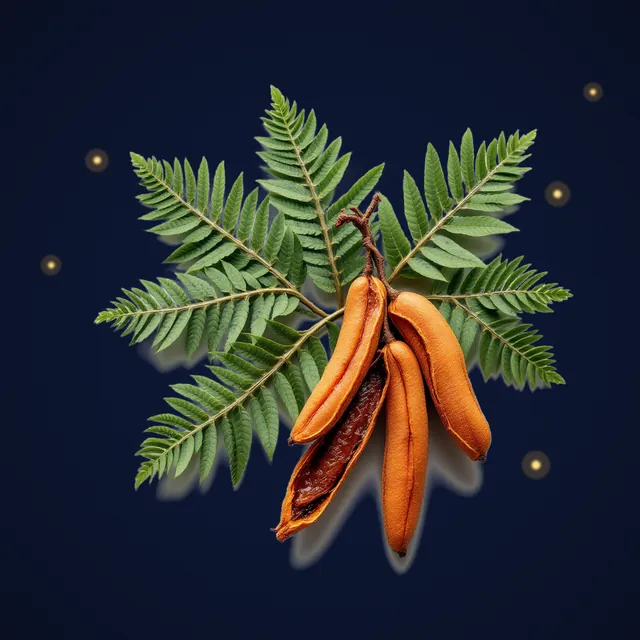
A spreading tree up to 25 m. Leaves pinnate, with 10–20 pairs of tiny leaflets that fold up at night. Flowers yellow with red veins. Pods brown, velvety, slightly curved, with a brittle shell; inside sticky dark pulp and shiny seeds.
Harvest
Gathered: pod pulp.
Form: pulp (food), drink, decoction.
Lookalikes
- carob – pods dark, flat and sweet, not sour
- velvet tamarind (Dialium) – small, black, velvety pods from Africa and Thailand
The information is educational and describes traditional use according to EMA/HMPC monographs (the European Medicines Agency and its Committee on Herbal Medicinal Products).It does not replace the advice of a doctor or pharmacist. Never eat a plant you are not 100% sure you recognise.