

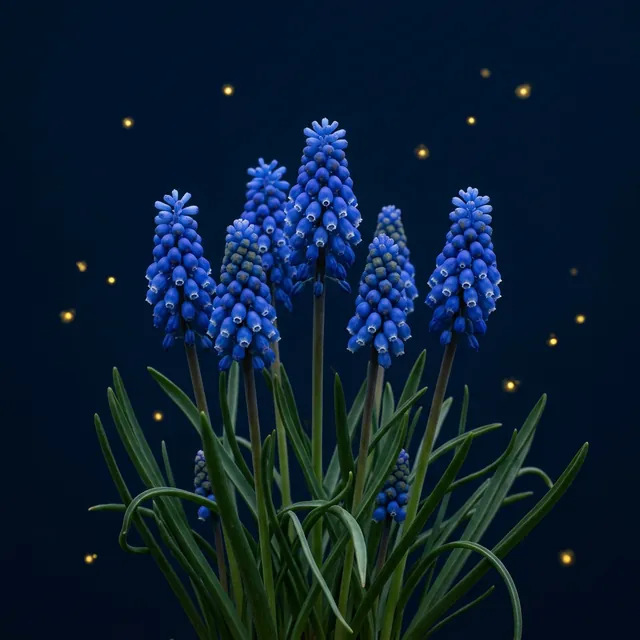
Poisonous plants
Armenian grape hyacinth
Muscari armeniacum Leichtlin ex Baker
Poisonous · do not pick
PoisonData on toxicity are scarceMylona zsquillFolkszafirek
Polish folk names: szafirek, hiacynt gronkowy, szafirki
Symptoms of poisoning
After eating the bulb or leaves: nausea, vomiting and diarrhoea are possible. The sap can cause skin allergies.
What it looks like
A low bulbous perennial, 10–25 cm. Leaves narrow, channelled, green, already developing in autumn. Flowers small, globular "little jugs" in a dense cluster, from blue to navy, with a white rim; they bloom in April and May.
What it is sometimes confused with
- squill (Scilla) – similar blue flowers in bells, but the flowers are star-shaped and not closed in a "cluster"
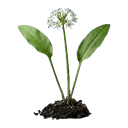
- ramsons (wild garlic) – the leaves also grow from a bulb, but the smell of garlic is distinct; the grape hyacinth does not smell of garlic
The information is educational and describes traditional use according to EMA/HMPC monographs (the European Medicines Agency and its Committee on Herbal Medicinal Products).It does not replace the advice of a doctor or pharmacist. Never eat a plant you are not 100% sure you recognise.