

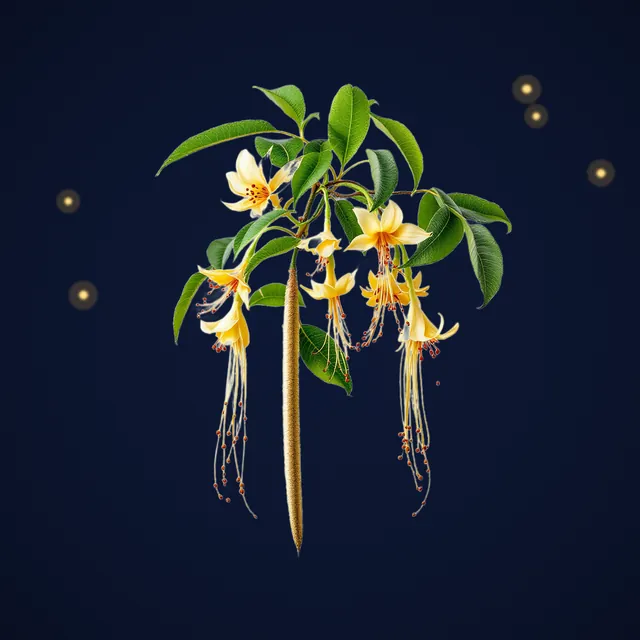
Strophanthus
Strophanthus hispidus DC., S. kombe Oliv., S. gratus (Wall. & Hook.) Baill.
Polish folk names: strofantus, skrętnik szorstki, kombe, trucizna strzał
Symptoms of poisoning
Nausea and vomiting, visual disturbances, confusion, a very slow or irregular pulse, dangerous rhythm disturbances and cardiac arrest. The poison also acts when it enters a wound.
What it looks like
Tropical climbers and shrubs, 5–15 m. Leaves opposite, roughly hairy in S. hispidus. Flowers cream-yellow with brown spots; the petals end in hanging threads up to 20 cm long. The fruit is a pair of long follicles with seeds bearing a plume of hairs.
What it is sometimes confused with
- oleander – a relative of the same family with similar glycosides, planted here in pots
The information is educational and describes traditional use according to EMA/HMPC monographs (the European Medicines Agency and its Committee on Herbal Medicinal Products).It does not replace the advice of a doctor or pharmacist. Never eat a plant you are not 100% sure you recognise.