

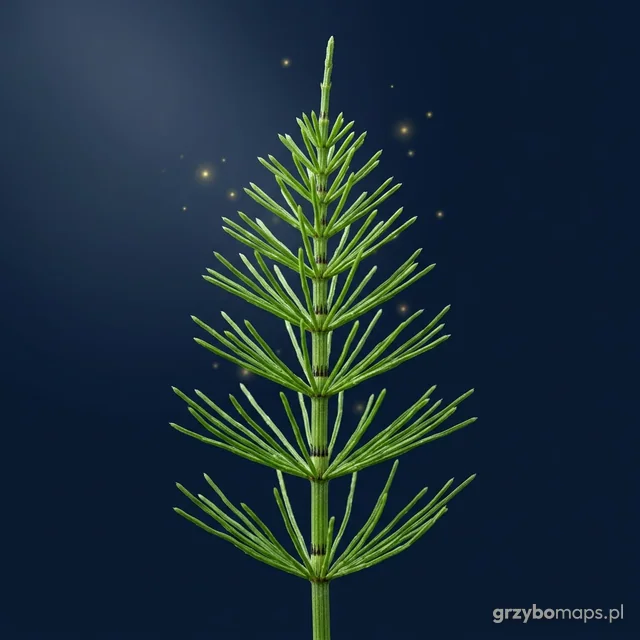
Field horsetail
Equisetum arvense L.
Traditional use
Traditionally (EMA/HMPC) to increase the amount of urine and flush the urinary tract, as an aid in minor urinary tract complaints; externally (decoction) as support for minor superficial wounds.
What it looks like
In spring, brownish, non-green shoots with a spore-bearing cone at the top appear; later green, sterile shoots with whorls of thin branches, resembling a small Christmas tree. Stem jointed, with toothed sheaths at the nodes.
Harvest
Gathered: green sterile shoots (herb).
When: May – July.
Form: infusion, decoction (external, compress).
Lookalikes
- MARSH HORSETAIL (Equisetum palustre) – poisonous to livestock; the simplest feature: in field horsetail the first segment of a side branch is LONGER than the toothed sheath on the stem, in marsh horsetail it is shorter
The information is educational and describes traditional use according to EMA/HMPC monographs (the European Medicines Agency and its Committee on Herbal Medicinal Products).It does not replace the advice of a doctor or pharmacist. Never eat a plant you are not 100% sure you recognise.