

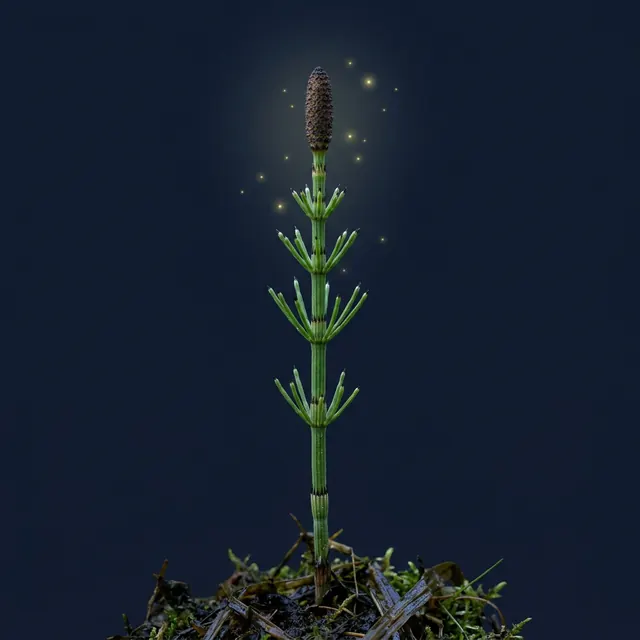
Marsh horsetail
Equisetum palustre L.
Polish folk names: chwoszczka, koński ogon błotny, krzemionka błotna
Symptoms of poisoning
Dangerous mainly to animals, especially horses: diarrhoea, emaciation, vitamin B1 deficiency, in horses paralysis of the hind limbs; in cattle a drop in milk yield and fertility. Effects in humans are poorly described; thiaminase present in horsetails can lead to vitamin B1 deficiency with long-term use.
What it looks like
Perennial, 20–50 cm, with a black rhizome. Sterile and fertile shoots similar, green; fertile ones bear a blunt spore cone, 1.5–2.5 cm, at the tip. Stem with 8–12 raised ridges and a narrow central hollow. Sheaths loose, green, with black teeth with a broad white margin. Branchlets unbranched, their first segment shorter than the sheath on the stem.
What it is sometimes confused with
- field horsetail – a raw material with an EMA monograph; in the field horsetail the first segment of a side branch is longer than the sheath on the stem, in the marsh horsetail it is shorter
- wood horsetail – branchlets branched once more, drooping in arches, sheaths rusty brown; not a medicinal raw material
- skrzyp bagienny – stem with a very wide hollow in the middle
The information is educational and describes traditional use according to EMA/HMPC monographs (the European Medicines Agency and its Committee on Herbal Medicinal Products).It does not replace the advice of a doctor or pharmacist. Never eat a plant you are not 100% sure you recognise.