

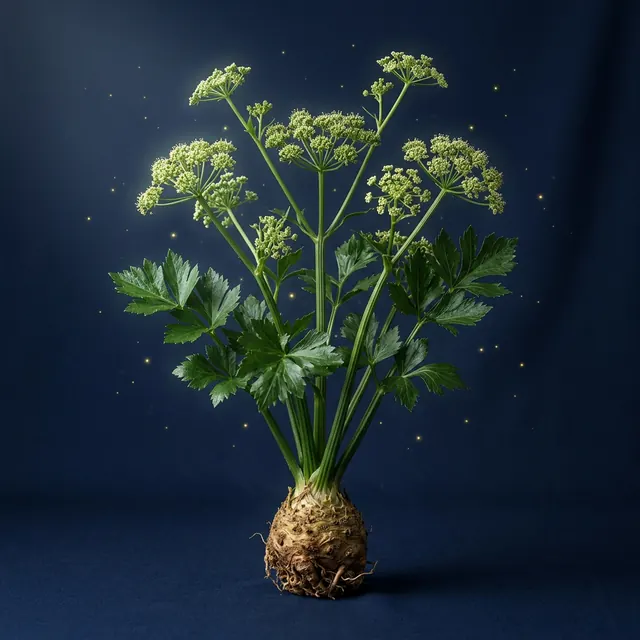
Celery
Apium graveolens L.
Polish folk names: selery, seler korzeniowy, seler naciowy, seler liściowy
Traditional use
Above all a vegetable and a spice, cultivated for over 2000 years. In old herbals the root, leaves and seeds were recommended as a diuretic and to stimulate digestion. There is no EMA monograph for celery and no good clinical studies of these uses. Celery supplies potassium and fibre. The scent comes from phthalides (e.g. butylphthalide and sedanolide).
What it looks like
Biennial plant with a strong, characteristic scent, up to 1 m. Stem angular, hollow. Leaves glossy, dark green, pinnate, with rhombic, incised segments; in celery (stalk type) with thick, fleshy stalks. Small whitish or greenish-white flowers in small umbels without bracts. Fruits tiny, about 2 mm. In the root variety, a fleshy, round root.
Harvest
Gathered: root, leaves (foliage), fruits (seeds).
When: July – October.
Form: kitchen, juice, seed infusion.
Lookalikes
- water hemlock (Cicuta virosa) – poisonous, grows near water, rhizome with chambers
- fool’s parsley (Aethusa cynapium) and poison hemlock (Conium maculatum) – poisonous umbellifers with white umbels; wild celery does not grow in Poland, so do not collect “wild celery”
The information is educational and describes traditional use according to EMA/HMPC monographs (the European Medicines Agency and its Committee on Herbal Medicinal Products).It does not replace the advice of a doctor or pharmacist. Never eat a plant you are not 100% sure you recognise.