

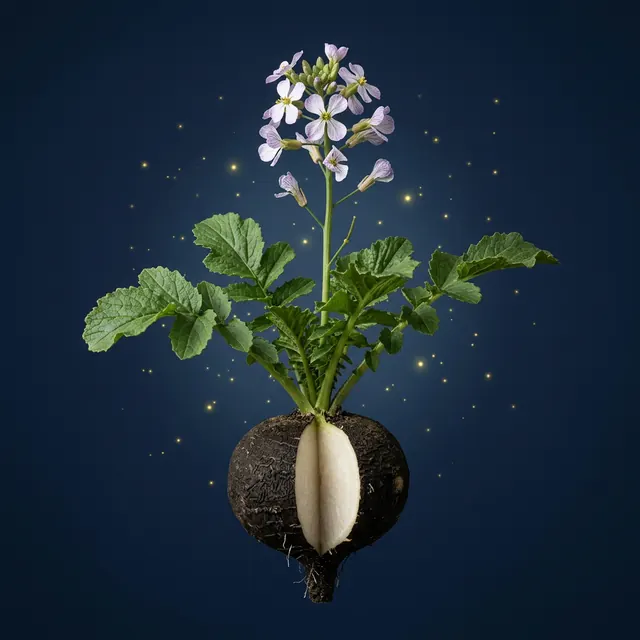
Radish
Raphanus sativus L.
Polish folk names: rzodkiew czarna, rzodkiewka
Traditional use
A vegetable cultivated since antiquity: the small radish, white and black radish (winter variety). In folk medicine extracts of the root and aerial parts were used for stomach complaints, urinary tract infections and liver inflammation; in Polish tradition black radish juice with honey was given for cough and “for the bile”. Radish contains glucosinolates and isothiocyanates (pungent taste). A 2019 review describes antioxidant and liver-protective effects in laboratory and animal studies; there are no clinical studies. There is no EMA monograph.
What it looks like
Annual or biennial plant with a thick, fleshy root: red and round (radish), white and elongated, or black with white flesh (black radish). Leaves lyre-shaped, the lower ones pinnately lobed, roughly hairy. Flowers white or lilac with distinct veining, 4 petals arranged in a cross, in a raceme. The fruit is a spongy siliqua with bead-like constrictions.
Harvest
Gathered: root (thickened), root juice.
When: May, June, September, October.
Form: juice, syrup with honey, kitchen.
Lookalikes
- wild radish (Raphanus raphanistrum) – a wild field weed, thin, unthickened root
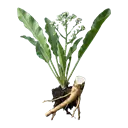
- horseradish – also a pungent root of the cabbage family, but long and white, with large leaves
The information is educational and describes traditional use according to EMA/HMPC monographs (the European Medicines Agency and its Committee on Herbal Medicinal Products).It does not replace the advice of a doctor or pharmacist. Never eat a plant you are not 100% sure you recognise.