

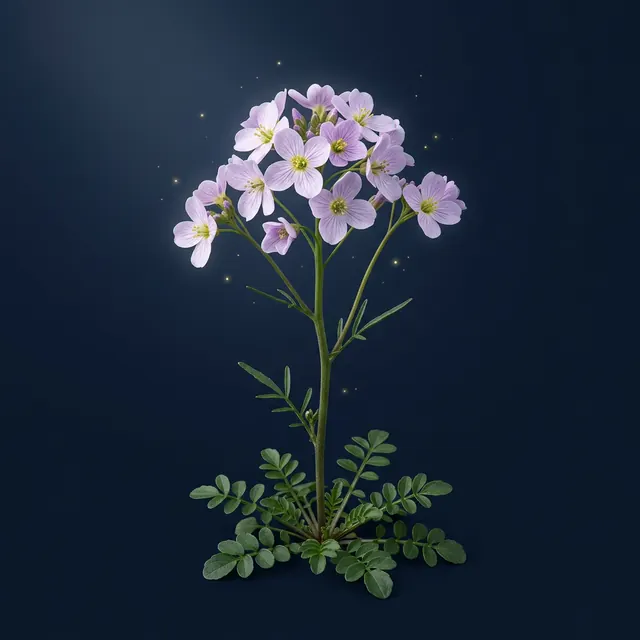
Cuckooflower
Cardamine pratensis L.
Polish folk names: rzeżucha, rzeżucha dzika
Traditional use
No EMA monograph. In folk medicine, cuckooflower was regarded as a diuretic plant that stimulates digestion, and the fresh leaves were eaten in spring as a source of vitamin C. The sharp taste comes from sulphur compounds (isothiocyanates), as in other brassicas. There are no clinical studies confirming a medicinal effect.
What it looks like
Perennial of damp meadows, 15–50 cm tall. A basal rosette of pinnately divided leaves with round leaflets; the terminal leaflet is the largest. Stem leaves have narrow, lanceolate leaflets. In April and May, a loose raceme of pale violet or white 4-petalled flowers. Fruits are long, narrow siliques up to 25 mm.
Harvest
Gathered: young leaves, flowers.
When: March – May.
Form: kitchen (fresh, for salads and curd cheese).
Lookalikes
- Large bittercress – grows by water, white flowers with violet anthers; also edible, bitter
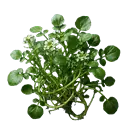
- Watercress – grows in water, small white flowers; wild plants should not be eaten raw (parasites)
The information is educational and describes traditional use according to EMA/HMPC monographs (the European Medicines Agency and its Committee on Herbal Medicinal Products).It does not replace the advice of a doctor or pharmacist. Never eat a plant you are not 100% sure you recognise.