

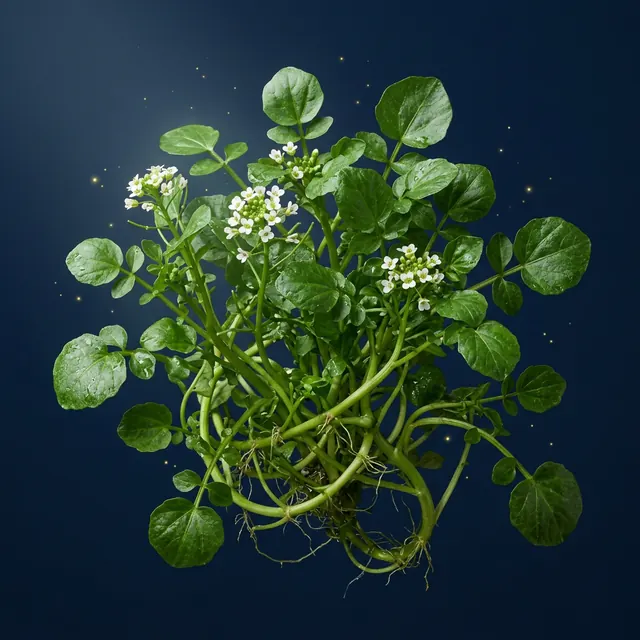
Watercress
Nasturtium officinale W.T.Aiton
Polish folk names: rukiew, rzeżucha wodna
Traditional use
No EMA monograph. Watercress is an old vegetable, grown in Europe since the Middle Ages in special beds. Its sharp, mustardy taste comes from the glucosinolate gluconasturtiin; in laboratory studies such compounds have a chemopreventive effect, but there is no clinical evidence for this. 100 g of the herb contains a lot of vitamin K (about 250 µg), vitamin C (about 43 mg), potassium and calcium.
What it looks like
Perennial of shallow, clean waters and springs, with a hollow, angular stem that creeps and roots at the nodes. Leaves odd-pinnate with 3–9 leaflets; the terminal leaflet is large and roundish, the lateral ones smaller and ovate. Shoots stay green through the whole season. Tiny white 4-petalled flowers in racemes at the raised tips of the shoots. Fruits are rounded siliques 10–18 mm long.
Harvest
Gathered: young shoots and leaves.
When: April, May, June, September, October.
Form: kitchen (salads, sandwiches, soups).
Lookalikes
- Umbellifers growing in water, including the DEADLY POISONOUS cowbane and the poisonous fine-leaved water-dropwort – they have white flowers in umbels and leaves with toothed, narrow segments; watercress has white, 4-petalled flowers in racemes and pinnate leaves with a large, rounded terminal leaflet
- Large bittercress – a similar plant of waterside banks, white flowers with violet anthers (yellow in watercress); harmless
The information is educational and describes traditional use according to EMA/HMPC monographs (the European Medicines Agency and its Committee on Herbal Medicinal Products).It does not replace the advice of a doctor or pharmacist. Never eat a plant you are not 100% sure you recognise.