

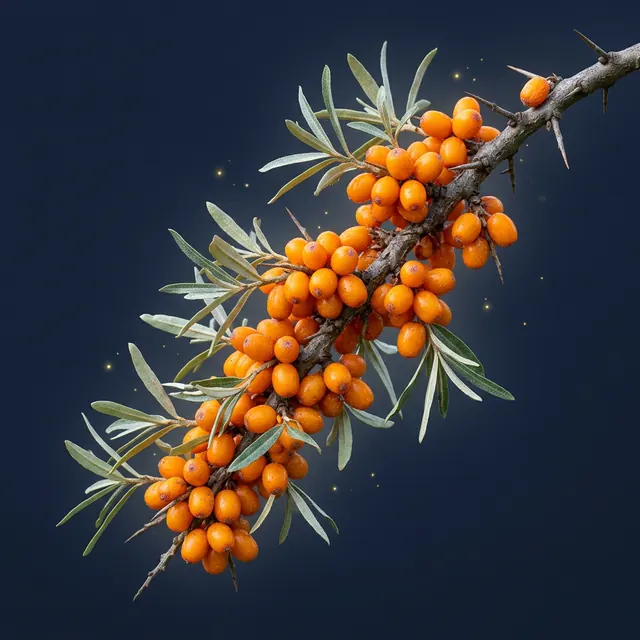
Sea buckthorn
Hippophae rhamnoides L.
Polish folk names: rokitnik pospolity, bodlak, bodzieniec, oliwa leśna, cierń morska
Traditional use
No EMA monograph. In the traditional medicine of Tibet, Mongolia and Siberia the fruits, leaves and young shoots were used for diseases of the stomach and intestines, skin and wounds. Sea buckthorn oil is used externally on dry, irritated skin, burns and frostbite. The fruits contain a great deal of vitamin C (in wild ones from 120 to 900 mg per 100 g) and carotenoids and are suitable for juices, syrups and jams. Studies indicate that a diet with sea buckthorn may slightly lower cholesterol and triglycerides, but this is not proof of a medicinal effect.
What it looks like
Thorny shrub 1.5–6 m tall. Leaves narrow-lanceolate, entire, grey-green above, silvery beneath from scale-like hairs. Flowers before the leaves develop, with tiny brown flowers. Female plants bear orange, globose or ovoid fruits 6–10 mm long in autumn, densely clustered along the twigs.
Harvest
Gathered: fruit, oil from the fruits and seeds, leaf.
When: August – October.
Form: juice, syrup, oil (externally or in capsules), kitchen (jam, jelly).
Lookalikes
- Russian olive - also has silvery leaves, but the fruits are yellowish and mealy; harmless
- Other shrubs with red or orange fruits (honeysuckle, guelder rose) - they have no narrow silvery leaves or thorns; their fruits are poisonous or inedible raw
The information is educational and describes traditional use according to EMA/HMPC monographs (the European Medicines Agency and its Committee on Herbal Medicinal Products).It does not replace the advice of a doctor or pharmacist. Never eat a plant you are not 100% sure you recognise.