

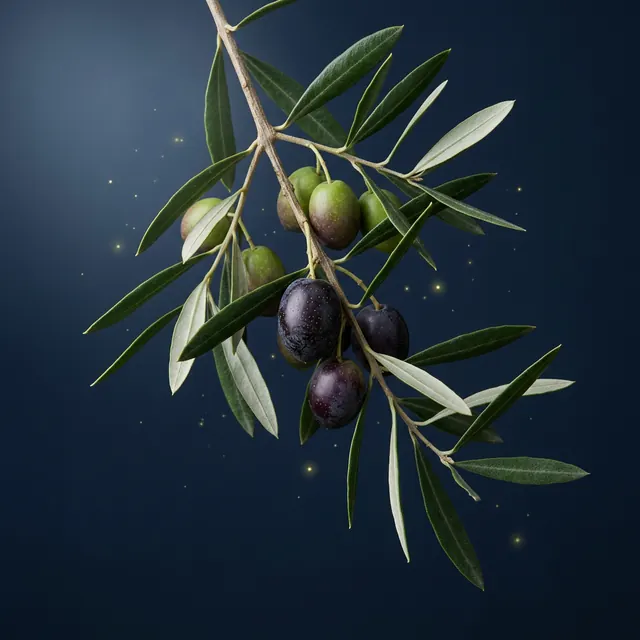
Olive
Olea europaea L.
Polish folk names: oliwka, drzewo oliwne, oliwnik europejski
Traditional use
Traditionally (EMA/HMPC) olive leaf aids the excretion of water by the kidneys in mild cases of water retention, after a doctor has excluded serious disease. Data from studies on increasing the amount of urine are limited. Olive oil is pressed from the fruit – that is ordinary food.
What it looks like
Evergreen, long-lived tree up to 12 m with a crooked, gnarled trunk. Leaves opposite, narrowly lanceolate, entire, leathery, dark green above, silvery grey beneath. Flowers small, whitish, in panicles. The fruit is a drupe up to 3.5 cm, green, bluish-black when ripe.
Harvest
Gathered: leaf.
Form: infusion.
Lookalikes
- Russian olive (Elaeagnus angustifolia): a shrub planted in Poland with similar, silvery, narrow leaves – but arranged alternately, with thorny shoots
- Willow (narrow leaves): its leaves are serrated and without a silver underside
The information is educational and describes traditional use according to EMA/HMPC monographs (the European Medicines Agency and its Committee on Herbal Medicinal Products).It does not replace the advice of a doctor or pharmacist. Never eat a plant you are not 100% sure you recognise.