

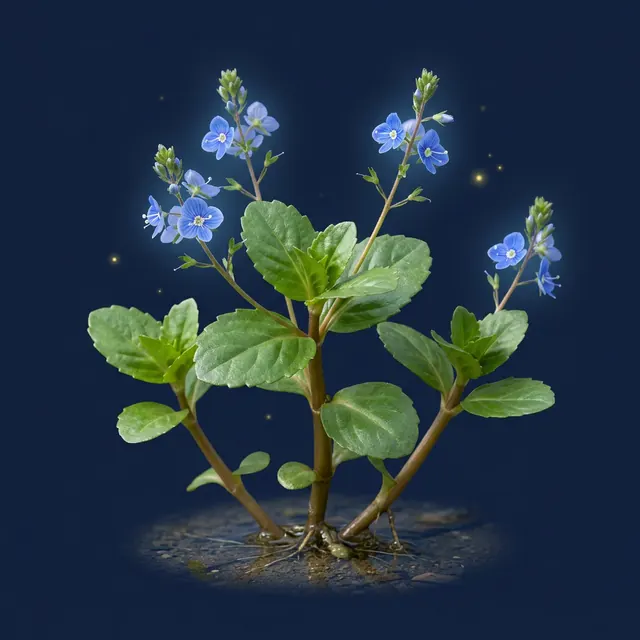
Brooklime
Veronica beccabunga L.
Traditional use
Of all the speedwells it is the one most often eaten, especially in the countryside in times of famine. In folk medicine it was regarded as a cleansing, anti-inflammatory, mildly diuretic and antiscorbutic remedy; in reality it has little vitamin C, and the old juices could not cure scurvy. The crushed herb was applied to burns and ulcers. There is no EMA monograph; it is considered a plant of little medicinal value.
What it looks like
Aquatic perennial, 20–60 cm, with fleshy, almost rounded stems that trail near the base and root at the nodes. Leaves opposite, ovate, blunt, fleshy, hairless and shiny, shallowly serrated. Small blue flowers, 5–8 mm, with 4 petals bearing darker veins, in loose racemes from the axils of the upper leaves.
Harvest
Gathered: herb (aerial parts), young leaves.
When: May – August.
Form: kitchen (after cooking), compress.
Lookalikes
- watercress – pinnate leaves, white flowers; edible
- marsh speedwell and water speedwell – narrow, stalkless leaves; harmless
- cowbane – grows in the same places; deadly poisonous, pinnate leaves
The information is educational and describes traditional use according to EMA/HMPC monographs (the European Medicines Agency and its Committee on Herbal Medicinal Products).It does not replace the advice of a doctor or pharmacist. Never eat a plant you are not 100% sure you recognise.