

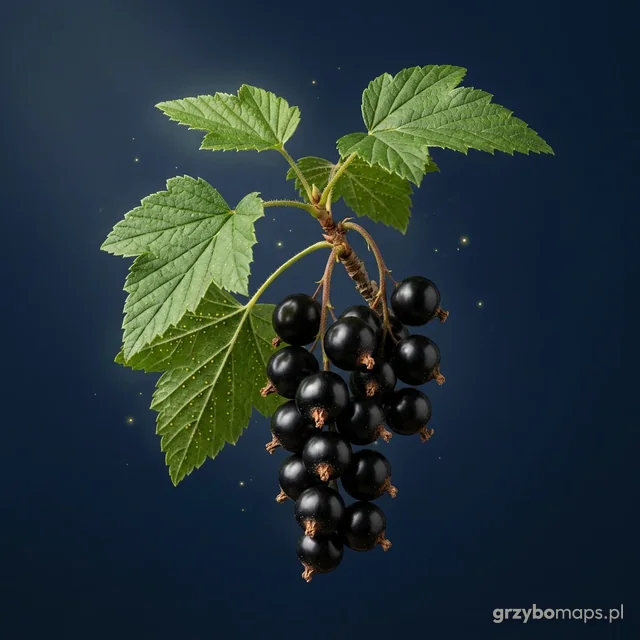
Blackcurrant
Ribes nigrum L.
Polish folk names: smrodynia, smorodina
Traditional use
According to the HMPC (EMA, 2017) monograph, the leaf traditionally for minor joint pain and to increase the amount of urine and flush the urinary tract. The fruits are valued in the kitchen as rich in vitamin C.
What it looks like
Shrub up to 1.5 m tall. Leaves 3–5-lobed, toothed, with glands on the underside – when rubbed they give off a strong, distinctive scent. Fruits black, shiny, in hanging clusters.
Harvest
Gathered: leaf, fruit.
When: June – July.
Form: infusion, juice.
Lookalikes
- Redcurrant: leaves without a strong smell, red fruits; blackcurrant smells distinctive when a leaf is rubbed
The information is educational and describes traditional use according to EMA/HMPC monographs (the European Medicines Agency and its Committee on Herbal Medicinal Products).It does not replace the advice of a doctor or pharmacist. Never eat a plant you are not 100% sure you recognise.