

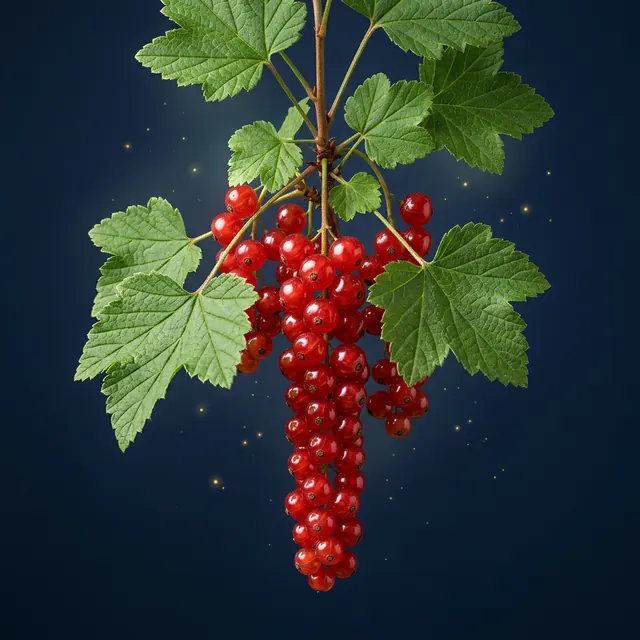
Redcurrant
Ribes rubrum L.
Polish folk names: porzeczka czerwona, porzeczka pospolita
Traditional use
Above all an edible fruit: raw, in juices, jellies, jams and wines. In folk medicine the fruit was considered antiscorbutic, refreshing, mildly laxative and appetite-stimulating, and a decoction of the leaves was applied externally for rheumatic pains. There is no EMA monograph (only the blackcurrant leaf has one).
What it looks like
Shrub up to about 2 m, without thorns. Leaves 3–5-lobed, serrate-toothed, with yellowish glands underneath. In April, small yellowish-green to reddish flowers in clusters. The fruits are small, round, shiny, red berries in hanging clusters, sour in taste.
Harvest
Gathered: fruit.
When: June – July.
Form: fresh fruit, juice, jelly, syrup (kitchen).
Lookalikes
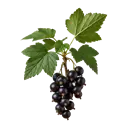
- blackcurrant – black fruit, fragrant leaves; harmless
- fly honeysuckle – red berries fused in pairs; poisonous
The information is educational and describes traditional use according to EMA/HMPC monographs (the European Medicines Agency and its Committee on Herbal Medicinal Products).It does not replace the advice of a doctor or pharmacist. Never eat a plant you are not 100% sure you recognise.