

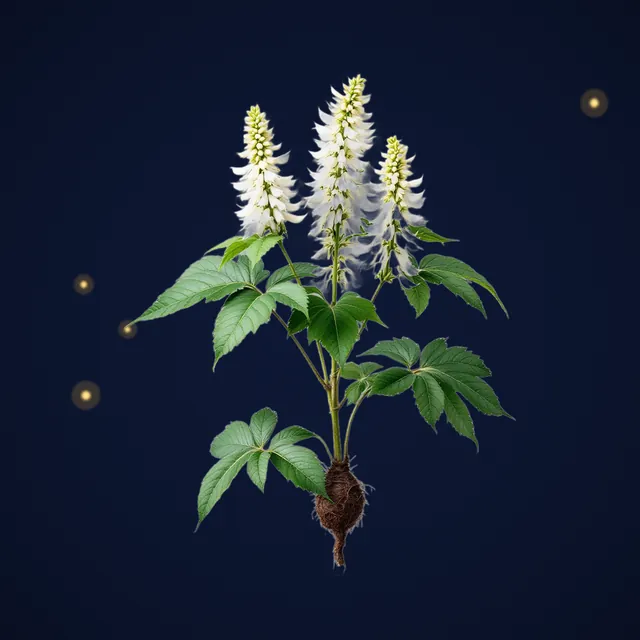
Black cohosh
Actaea racemosa L. (syn. Cimicifuga racemosa)
Polish folk names: świecznica groniasta, cimicifuga, black cohosh
Traditional use
According to the European Medicines Agency (EMA) monograph, extracts of black cohosh rhizome have well-established use in relieving menopausal complaints such as hot flushes and excessive sweating. A 2012 Cochrane review, however, found the evidence insufficient. The Indians of eastern North America used the rhizome for women's and rheumatic complaints.
What it looks like
A stately woodland perennial 1–2.5 m tall. Leaves large, triply compound, with sharply toothed leaflets. In summer it sends up long, narrow racemes of white flowers made only of stamens, like candles. Rhizome dark, knotty. In Poland it is planted in shady gardens.
Harvest
Gathered: rhizome.
Form: extracts in tablets (herbal medicines).
Lookalikes
- baneberry (Actaea spicata) – our woodland relative with black, poisonous berries
- Asian Cimicifuga species – frequent adulterants of the raw material
The information is educational and describes traditional use according to EMA/HMPC monographs (the European Medicines Agency and its Committee on Herbal Medicinal Products).It does not replace the advice of a doctor or pharmacist. Never eat a plant you are not 100% sure you recognise.