

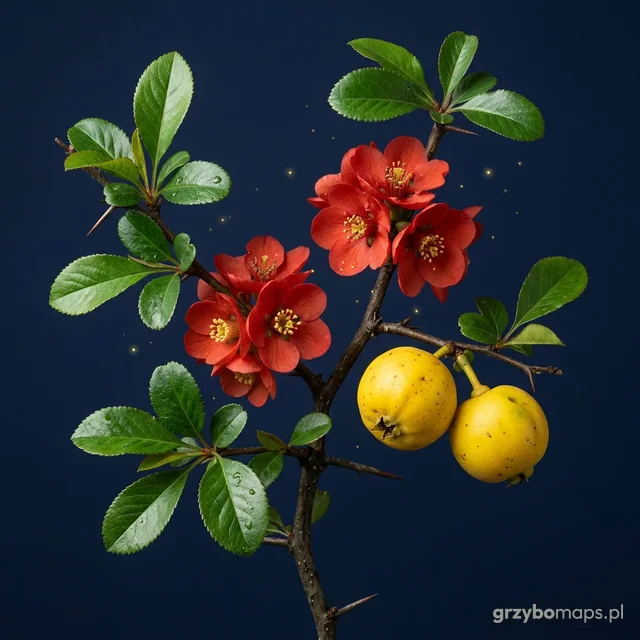
Japanese quince
Chaenomeles japonica (Thunb.) Lindl. ex Spach
Polish folk names: pigwa, pigwa japońska, cytryna północy
Traditional use
The fruits are a valuable source of vitamin C, fibre and phenolic compounds; traditionally added to tea and syrups in the cold season. The vitamin C content drops sharply with storage and processing. It is a food fruit, not a medicine.
What it looks like
Low, thorny shrub up to 1 m tall, covered in brick-red flowers in early spring. Fruits globular, 3–5 cm, hard, yellow, very aromatic and sour.
Harvest
Gathered: fruit.
When: September – October.
Form: syrup, preserve, dried fruit for tea.
Lookalikes
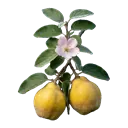
- Quince (Cydonia oblonga): a tree with large, downy fruits, without thorns
The information is educational and describes traditional use according to EMA/HMPC monographs (the European Medicines Agency and its Committee on Herbal Medicinal Products).It does not replace the advice of a doctor or pharmacist. Never eat a plant you are not 100% sure you recognise.