

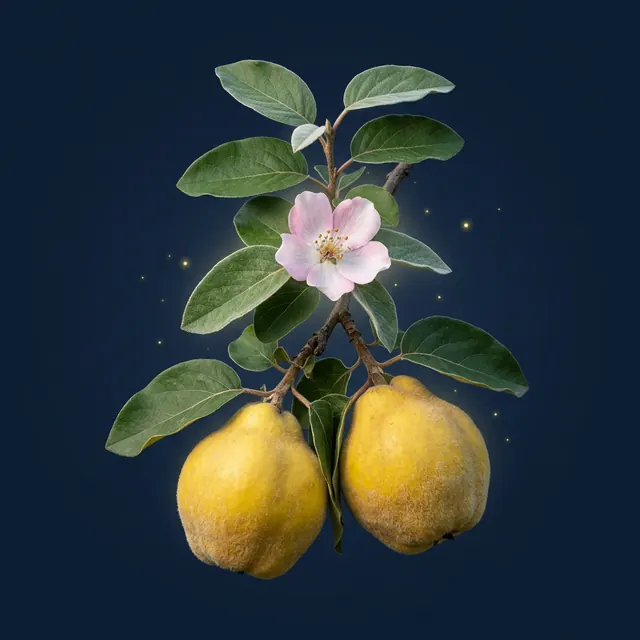
Quince
Cydonia oblonga Mill.
Polish folk names: pigwa, jabłko cydońskie, Semen Cydoniae
Traditional use
The raw fruits are hard and tart, aromatic after cooking – jellies, jams and syrups are made from them. In herbalism the raw material is whole quince seeds: their seed coat contains about 22% mucilage, formerly used as a mild laxative and externally as an anti-inflammatory (poultices). A 2016 review collects many effects in the laboratory and in animals (antioxidant, anti-inflammatory), and the seed mucilage was tested in wound dressings. No EMA monograph.
What it looks like
Large shrub or small tree, usually up to 3 m in Poland. Leaves ovate, entire, felty-hairy beneath. Flowers solitary, large, white to pink, five-petalled, at the turn of May and June, after the leaves have developed. Fruits apple- or pear-shaped, yellow, about 6 cm, covered in greyish down, very aromatic, with hard, astringent flesh.
Harvest
Gathered: fruit, seeds (whole).
When: October – November.
Form: syrup, galaretka/kitchen, maceration of whole seeds (mucilage).
Lookalikes
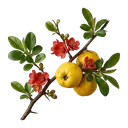
- Japanese quince – a low, thorny shrub with red flowers and small, hard fruits; also edible after processing
- pear and apple – fruits without the felty down
The information is educational and describes traditional use according to EMA/HMPC monographs (the European Medicines Agency and its Committee on Herbal Medicinal Products).It does not replace the advice of a doctor or pharmacist. Never eat a plant you are not 100% sure you recognise.