

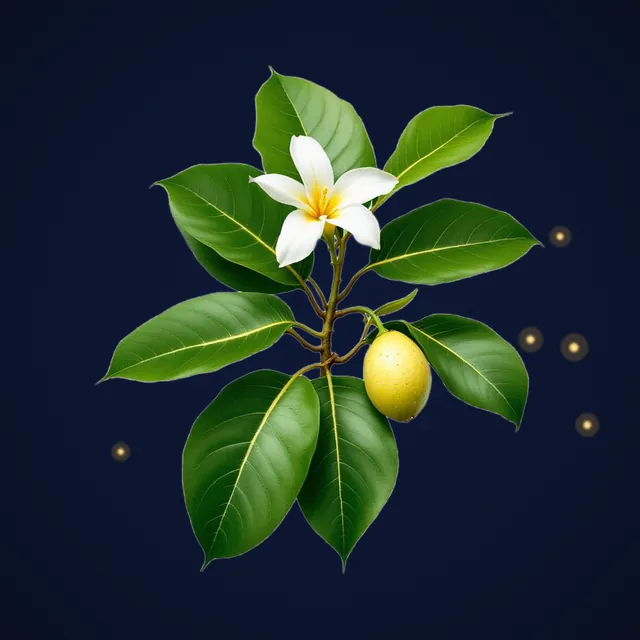
Noni
Morinda citrifolia L.
Polish folk names: noni, morinda cytrynolistna, owoc serowy
Traditional use
[TRADITION] In Polynesia noni was a famine plant and a remedy: poultices of leaves and fruit were placed on wounds, boils and aching joints. Noni juice has been approved in the EU as a novel food since 2003. The advertised effect “for everything” has no backing in clinical studies.
What it looks like
A shrub or small tree 3–8 m tall. Leaves large, glossy, dark green, with deep veins. White, tubular flowers grow from a green head that turns into a knobbly, whitish fruit with “eyes” and the smell of ripe cheese.
Harvest
Gathered: fruits, leaves.
Form: fruit juice, leaf poultice (tradition).
Lookalikes
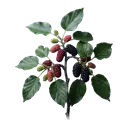
- white and black mulberry – despite the name “Indian mulberry”, unrelated trees with edible, sweet fruit
The information is educational and describes traditional use according to EMA/HMPC monographs (the European Medicines Agency and its Committee on Herbal Medicinal Products).It does not replace the advice of a doctor or pharmacist. Never eat a plant you are not 100% sure you recognise.