

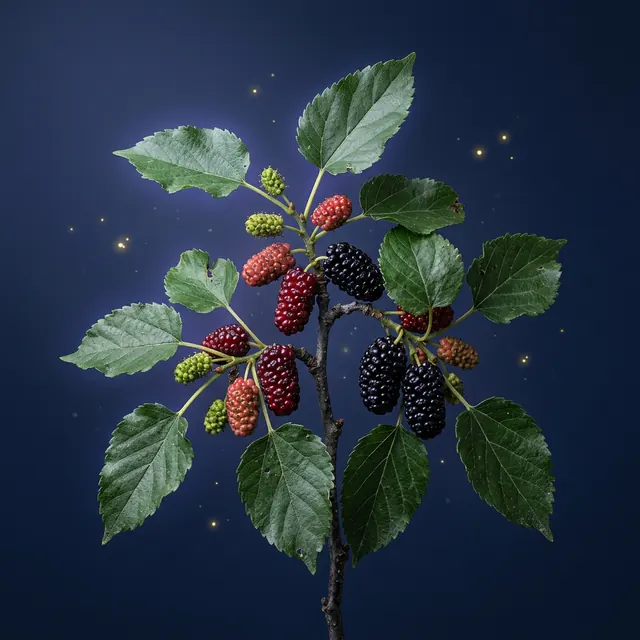
Black mulberry
Morus nigra L.
Polish folk names: morwa, jagody morwowe
Traditional use
The fruits are very juicy, sweet-sour; marmalade, syrup and tinctures are made from them. In folk medicine black mulberry was used, among other things, against tapeworms (root bark). The fruits contain anthocyanins (mainly cyanidin glucoside), flavonoids and chlorogenic acid; laboratory and animal studies describe an antioxidant effect, and the extract was tested, for example, in diabetic rats. No clinical studies and no EMA monograph.
What it looks like
Tree 10–15 m with a broad, round crown. Leaves oval, pointed, with a heart-shaped base, coarsely serrated, rough and hairy, never lobed. Male flowers in catkins, female ones in short heads. Infructescences resembling blackberries, up to 2.5 cm, ripening from green through red to black. A frost-sensitive species; rarely cultivated in Poland.
Harvest
Gathered: infructescence, (formerly: leaf, root bark).
When: July – September.
Form: syrup, juice, marmolada/kitchen.
Lookalikes
- white mulberry – more common in Poland, leaves thin, often lobed, fruits usually white or pink; also edible
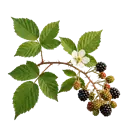
- blackberry – similar fruits, but on prickly shoots
The information is educational and describes traditional use according to EMA/HMPC monographs (the European Medicines Agency and its Committee on Herbal Medicinal Products).It does not replace the advice of a doctor or pharmacist. Never eat a plant you are not 100% sure you recognise.