

Soapwort
Saponaria officinalis L.
Polish folk names: mydlnik, mydło polne
Traditional use
According to the German Commission E, as an expectorant for catarrh of the upper respiratory tract (triterpene saponins). In the past a decoction was also used for washing delicate fabrics.
What it looks like
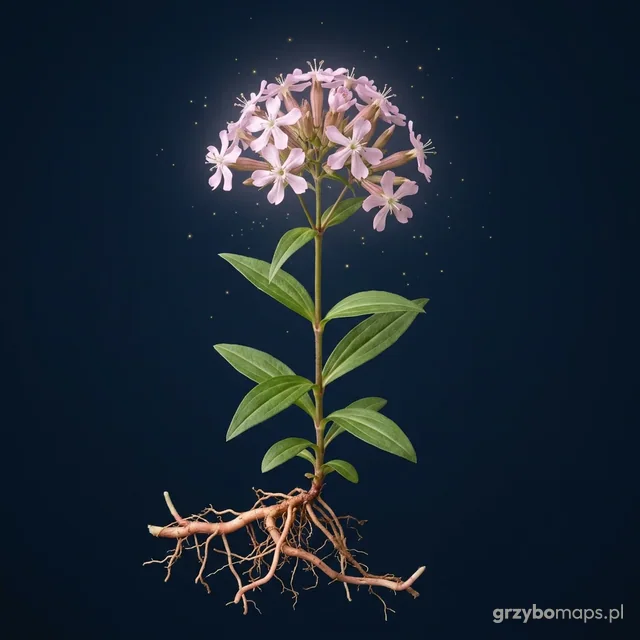
Perennial up to 70 cm tall along rivers and roads, with creeping runners. Leaves opposite, lanceolate, with 3 distinct veins. Pale pink flowers, fragrant in the evening, with 5 slightly notched petals; the root, rubbed in water, foams.
Harvest
Gathered: root.
When: September – October.
Form: decoction.
Lookalikes
- Bladder campion: white flowers with an inflated calyx; soapwort has pink, fragrant flowers with notched petals
- Pinks (Dianthus): narrow, grass-like leaves; soapwort has broad, lanceolate leaves with 3 veins
The information is educational and describes traditional use according to EMA/HMPC monographs (the European Medicines Agency and its Committee on Herbal Medicinal Products).It does not replace the advice of a doctor or pharmacist. Never eat a plant you are not 100% sure you recognise.