

Bladder campion
Silene vulgaris (Moench) Garcke
Polish folk names: lepnica zwyczajna, lepnica pospolita
Traditional use
This is a wild leaf vegetable, not a medicinal herb. In Mediterranean countries the young shoots and tender leaves are eaten raw in salads before flowering, and older leaves are boiled, fried with garlic, and added to omelettes and risotto (in Italy “sculpit”, in Spain “collejas”, in Cyprus sold in bunches). In Poland it is used mainly as fodder and a bee plant. No EMA monograph or medicinal studies.
What it looks like
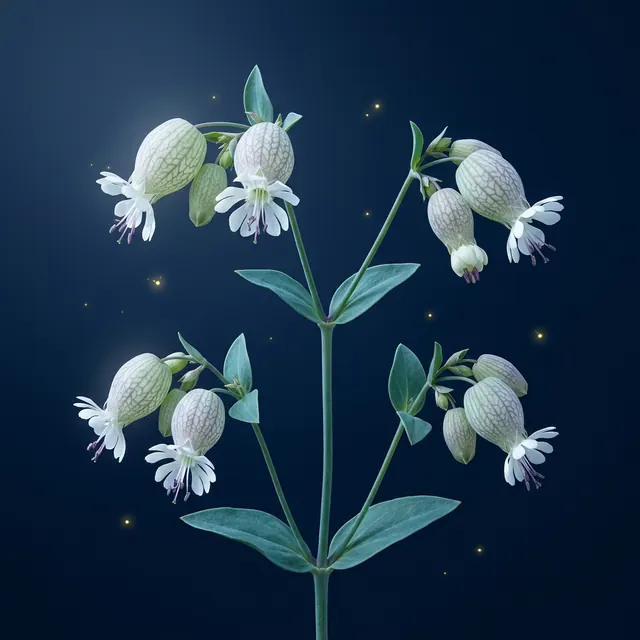
Perennial up to 1 m, hairless and blue-green from a waxy bloom. Leaves sessile, opposite, elliptic to lanceolate. Flowers white with deeply two-lobed petals, in loose cymes. Calyx hairless, bladder-like and inflated, with a network of 20 veins, light green or tinged violet.
Harvest
Gathered: young shoots, leaves.
When: April – May.
Form: kitchen (raw before flowering, older ones cooked).
Lookalikes
- white campion and night-flowering catchfly – also have inflated calyces, but are hairy and sticky; traditionally not eaten
- corncockle – also pink-like with narrow leaves, but hairy and with purple flowers; strongly poisonous
The information is educational and describes traditional use according to EMA/HMPC monographs (the European Medicines Agency and its Committee on Herbal Medicinal Products).It does not replace the advice of a doctor or pharmacist. Never eat a plant you are not 100% sure you recognise.