

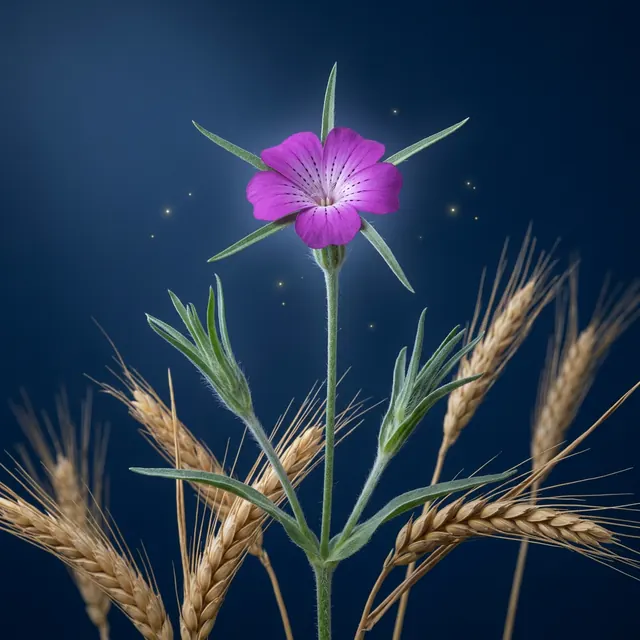
Corncockle
Agrostemma githago L.
Polish folk names: kąkolnica, kąkolica, czarny kąkol, czarnucha
Symptoms of poisoning
Scratchy throat, nausea, digestive disturbances; in more severe poisoning ulceration of the mucous membranes, headache, fever, rapid pulse, delirium, heart rhythm disturbances, destruction of blood cells, and finally respiratory paralysis. Symptoms can appear after eating just 3–4 seeds; flour is harmful with as little as 0.5% seeds mixed in.
What it looks like
Annual plant, 30–80 cm, covered all over in soft, whitish hairs, which makes it grey-green. Leaves opposite, narrowly lanceolate, 5–13 cm. Flowers solitary on long stalks, 2.5–5 cm, with 5 purple-lilac petals with dark streaks. Calyx teeth long and narrow, projecting far beyond the petals. Seeds black, warty, about 3 mm.
What it is sometimes confused with
- cereals at the leaf stage – corncockle resembles them with its narrow leaves
- nigella (love-in-a-mist) – formerly also called corncockle
- catchflies and campions – other pink members of the pink family from fields and meadows
The information is educational and describes traditional use according to EMA/HMPC monographs (the European Medicines Agency and its Committee on Herbal Medicinal Products).It does not replace the advice of a doctor or pharmacist. Never eat a plant you are not 100% sure you recognise.