

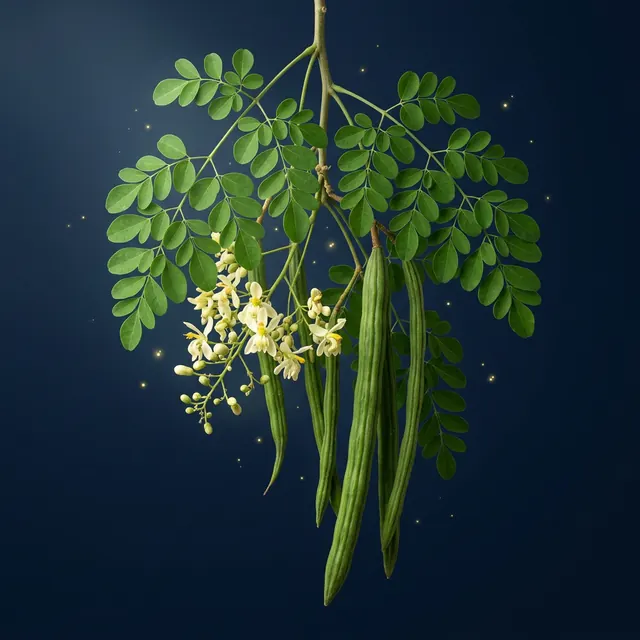
Moringa
Moringa oleifera Lam.
Polish folk names: moringa, drzewo chrzanowe
Traditional use
In India, Africa and Asia the leaves, young pods and flowers are eaten as a vegetable, and oil is pressed from the seeds. In folk medicine nearly all parts were used. A few small human studies with leaf powder suggested lowering of blood sugar and fats, but that is too little for recommendations. There is no EMA monograph.
What it looks like
Fast-growing tree up to 10 m with an open crown. Leaves up to 60 cm, multiply pinnate, with small (1–2 cm), light green, elliptical leaflets. Flowers creamy white, fragrant, in panicles. The fruits are hanging, ribbed, green pods up to 60 cm (“drumsticks”), with winged seeds.
Harvest
Gathered: leaf (powdered), seeds (oil).
Form: powder, infusion.
Lookalikes
- Black locust and other trees with pinnate leaves: black locust has poisonous seeds and bark, but moringa does not grow in Poland and the powder is bought ready-made
The information is educational and describes traditional use according to EMA/HMPC monographs (the European Medicines Agency and its Committee on Herbal Medicinal Products).It does not replace the advice of a doctor or pharmacist. Never eat a plant you are not 100% sure you recognise.