

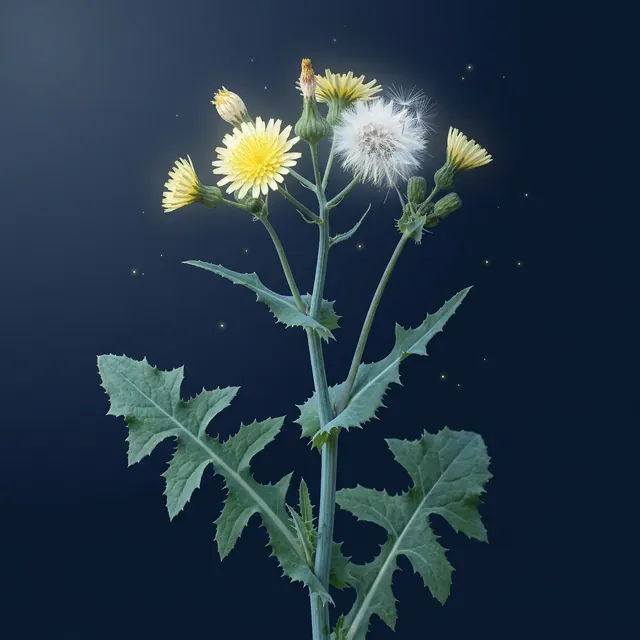
Common sowthistle
Sonchus oleraceus L.
Polish folk names: mlecz warzywny
Traditional use
The young leaves, slightly bitter in taste, were formerly eaten raw and cooked, and the roots after cooking; the leaves contain about 30–40 mg of vitamin C per 100 g. In folk medicine an infusion was given for delayed menstruation and diarrhoea, and the milky sap was rubbed on warts. There is no EMA monograph and there are no clinical studies.
What it looks like
Annual plant up to 1.2 m with a hollow stem and white milky sap. Leaves soft, pinnately lobed with a triangular terminal lobe, finely prickly-toothed; the upper ones clasp the stem with an arrow-shaped base. Pale yellow flower heads made up solely of ray florets; fruits with white down.
Harvest
Gathered: young leaves, root (cooked).
When: April – September.
Form: kitchen (salads, cooked like spinach), infusion.
Lookalikes
- spiny sowthistle – stiff, sharply prickly leaves; harmless
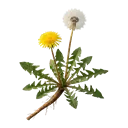
- dandelion – leaves only in a basal rosette, a single flower head on a hollow stem; harmless
- prickly lettuce – milky sap, prickles on the midrib underneath the leaf; harmless in small amounts
The information is educational and describes traditional use according to EMA/HMPC monographs (the European Medicines Agency and its Committee on Herbal Medicinal Products).It does not replace the advice of a doctor or pharmacist. Never eat a plant you are not 100% sure you recognise.