

Dandelion
Taraxacum officinale F.H.Wigg. (agg.)
Polish folk names: mlecz, dmuchawiec, brodawnik, mniszek pospolity, lion's tooth
Traditional use
Traditionally (EMA/HMPC) for mild digestive complaints and to increase the amount of urine and flush the urinary tract in minor complaints.
What it looks like
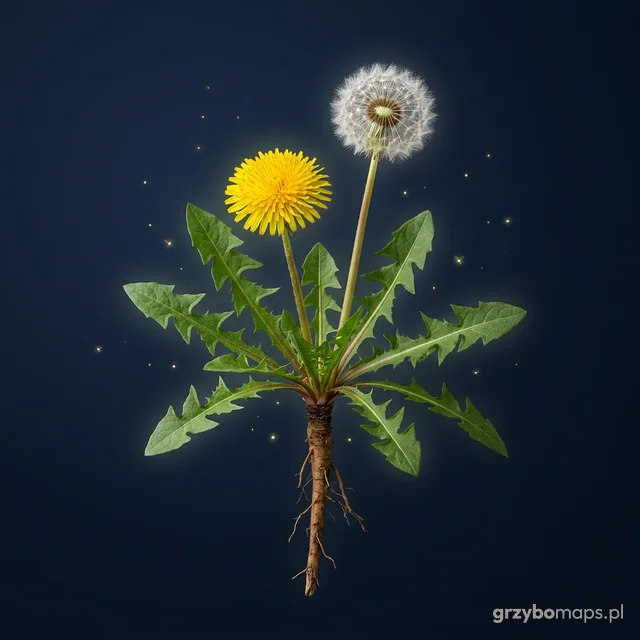
A basal rosette of deeply cut leaves with downward-pointing teeth (‘lion’s tooth’). A hollow flower stalk with white milky sap, topped by a single yellow flower head; then a spherical ‘clock’ of seeds.
Harvest
Gathered: root with herb, leaf, flowers (culinary).
When: April, May, September, October.
Form: decoction (root), infusion, juice, salad from young leaves.
Lookalikes
- dandelion-like members of the daisy family (e.g. hawksbeard, hawkbit) – harmless; the dandelion has a hollow, leafless stalk with milky sap and a single flower head
The information is educational and describes traditional use according to EMA/HMPC monographs (the European Medicines Agency and its Committee on Herbal Medicinal Products).It does not replace the advice of a doctor or pharmacist. Never eat a plant you are not 100% sure you recognise.