

Corn mint
Mentha arvensis L.
Traditional use
In folk medicine it was used for digestive disorders, and an infusion of the leaves for fever and headache. The oil of corn mint (cultivated varieties, especially Japanese mint) contains 70–80% menthol and is used to produce it; it also contains small amounts of pulegone and menthofuran. In the past it was added to milk to delay souring. The herb has no monograph of its own from the EMA; it is considered medicinally weaker than peppermint.
What it looks like
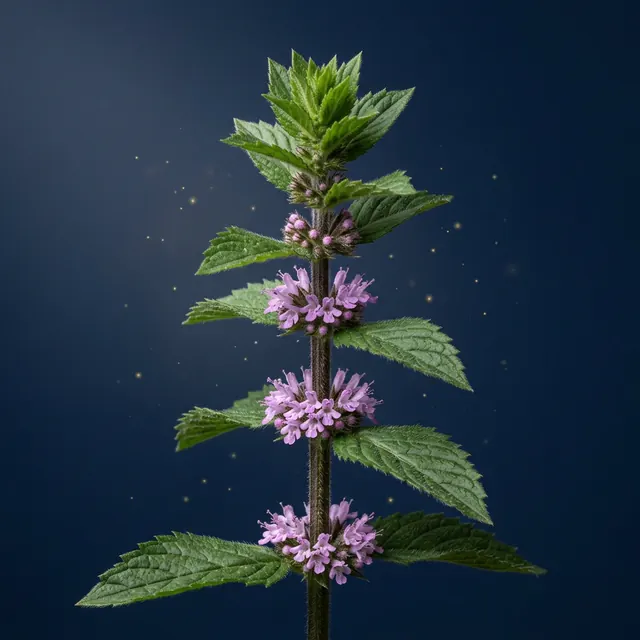
Aromatic perennial, 5–45 cm, with a creeping rhizome and stolons. Stem four-angled, hairy all around. Leaves opposite, ovate to oblong, stalked. Violet or pink flowers in globose whorls in the leaf axils, while the tip of the shoot ends in leaves without flowers – unlike other mints.
Harvest
Gathered: herb (aerial parts), leaf.
When: July – September.
Form: infusion, spice.
Lookalikes
- pennyroyal – spherical whorls, very toxic oil; grows in similar places
- water mint and peppermint – flowers in a spherical head or a spike at the top; harmless
The information is educational and describes traditional use according to EMA/HMPC monographs (the European Medicines Agency and its Committee on Herbal Medicinal Products).It does not replace the advice of a doctor or pharmacist. Never eat a plant you are not 100% sure you recognise.