

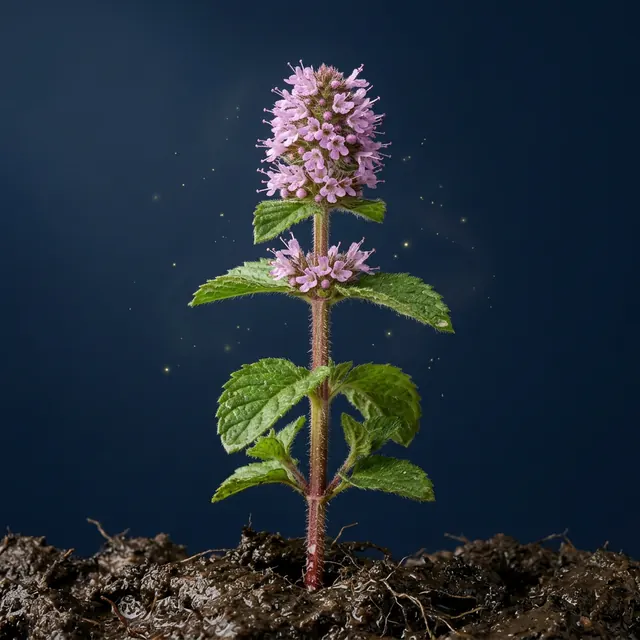
Water mint
Mentha aquatica L.
Polish folk names: mięta wodna
Traditional use
No EMA monograph. An edible spice and herbal tea, used in the kitchen as early as the Middle Ages; an ingredient of herbal shampoos and perfumes. No clinical studies confirming a medicinal effect.
What it looks like
Perennial up to 80 cm tall in bogs, on stream banks and in ditches. Leaves stalked, ovate, 2–6 cm, toothed, hairy, often flushed reddish. Pink or lilac flowers in globular heads at the top of the stem, with smaller whorls below. Strong lemon-mint scent.
Harvest
Gathered: leaf, herb (aerial parts).
When: July – September.
Form: infusion, kitchen.
Lookalikes
- corn mint - flowers in whorls in the leaf axils, without a round head at the top; harmless
- other mints and their hybrids - harmless
The information is educational and describes traditional use according to EMA/HMPC monographs (the European Medicines Agency and its Committee on Herbal Medicinal Products).It does not replace the advice of a doctor or pharmacist. Never eat a plant you are not 100% sure you recognise.