

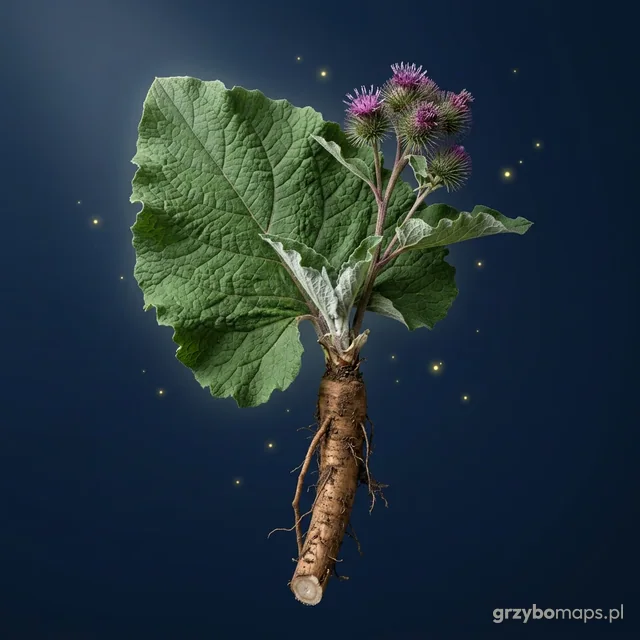
Greater burdock
Arctium lappa L. (także A. minus, A. tomentosum)
Polish folk names: łopuch, rzepień, kanoniczek
Traditional use
According to the HMPC (EMA, 2010) monograph, traditionally for temporary loss of appetite, for minor skin complaints (e.g. seborrhoea) and to increase the amount of urine and flush the urinary tract. Contains inulin, arctigenin and arctiin.
What it looks like
Large biennial plant: in year 1, a rosette of huge, heart-shaped leaves, grey and felty beneath. In year 2, a stem up to 2 m tall with globular, spiny flower heads with purple flowers – these are the burs that cling to fur.
Harvest
Gathered: root.
When: March, April, September, October.
Form: decoction.
Lookalikes
- Rhubarb and dock: large leaves, but without a grey, felty underside
- Butterbur: round, heart-shaped leaves, pink flower spikes in early spring
The information is educational and describes traditional use according to EMA/HMPC monographs (the European Medicines Agency and its Committee on Herbal Medicinal Products).It does not replace the advice of a doctor or pharmacist. Never eat a plant you are not 100% sure you recognise.