

Butterbur
Petasites hybridus (L.) Gaertn., B.Mey. & Scherb.
Symptoms of poisoning
After prolonged use, liver damage: from cholestasis and hepatitis to liver failure; often without symptoms for a long time, then fatigue, jaundice, dark urine, abdominal pain. Such cases have also been described after ready-made extracts.
What it looks like
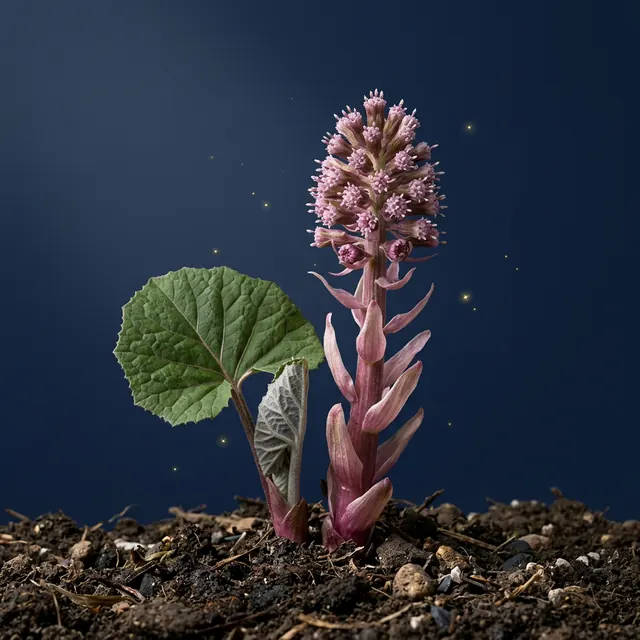
Perennial by streams and ditches, forming large stands. In March–May, before the leaves, thick, reddish stems with pink scales and a raceme of pale pink flower heads grow from the ground. Later huge heart-to-kidney-shaped leaves up to 60 cm across grow from the rhizome, unevenly toothed, grey-woolly beneath, with an unpleasant smell.
What it is sometimes confused with
- burdock (large leaves; edible root)
- coltsfoot (similar leaves, but smaller; yellow flowers – it also contains pyrrolizidine alkaloids)
- white butterbur (white flowers, similar leaves)
The information is educational and describes traditional use according to EMA/HMPC monographs (the European Medicines Agency and its Committee on Herbal Medicinal Products).It does not replace the advice of a doctor or pharmacist. Never eat a plant you are not 100% sure you recognise.