

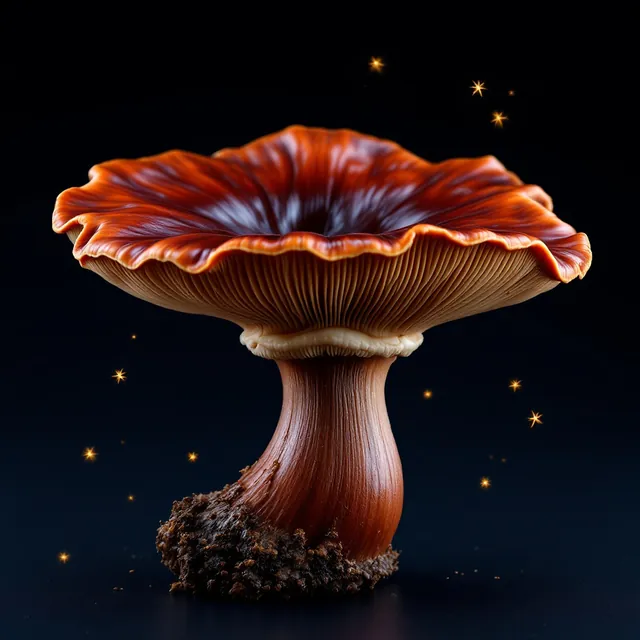
Reishi
Ganoderma lucidum (Curtis) P. Karst.
Polish folk names: reishi (Ganoderma lucidum), reishi, lingzhi, grzyb nieśmiertelności
Traditional use
[TRADITION] In the oldest Chinese herbal, the “Shennong Bencao Jing”, lingzhi belongs to the highest class: it was said to “prolong life and calm the spirit”. Today it is a popular supplement. A 2016 Cochrane review found insufficient evidence to use it as a stand-alone treatment for cancer, and a second Cochrane review did not confirm any effect on cholesterol, blood pressure or sugar. It is a bracket fungus, hard as wood, so it is not eaten but boiled.
What it looks like
An annual fruiting body, kidney- or fan-shaped, 5–25 cm across, usually with a lateral stem. The top shines as if varnished: red-brown, zoned, with a paler margin. The underside is whitish, with fine pores. It grows at the base of trunks and on the roots of deciduous trees, mainly oaks.
Harvest
Gathered: owocnik.
Form: decoction, powder, extracts (supplements).
Lookalikes
- artist’s bracket (Ganoderma applanatum) – brown, matt, without a stem, common on beeches
- red-belted conk – has an orange rim, but a matt, grey top and no stem
The information is educational and describes traditional use according to EMA/HMPC monographs (the European Medicines Agency and its Committee on Herbal Medicinal Products).It does not replace the advice of a doctor or pharmacist. Never eat a plant you are not 100% sure you recognise.