

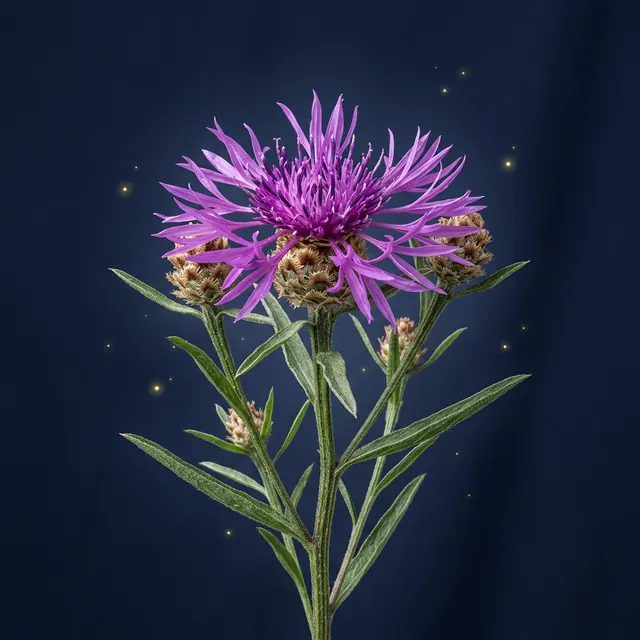
Brown knapweed
Centaurea jacea L.
Traditional use
It has no established medicinal use and no EMA monograph. The 2021–2022 studies are laboratory only: flavones were detected in the flowers, and extracts had a weak antioxidant effect and some antibacterial effect. Valued as a honey plant and as food for the larvae of the knapweed fritillary butterfly.
What it looks like
Perennial 20–100 cm tall with an angular, rough stem. Basal leaves ovate to lanceolate, sometimes pinnately cut, stem leaves narrow and sessile. Flower heads 2–6 cm, solitary at the tips of the shoots, with violet-purple tubular florets; the outer ones are larger, spreading like rays. Involucral bracts roundish, light rusty to brown, papery.
Harvest
Gathered: koszyczki kwiatowe.
When: June – September.
Form: infusion.
Lookalikes
- cornflower – cornflower-blue flowers, grows in cereal fields; harmless, used in herbal medicine
- greater knapweed – leaves deeply pinnately cut, involucre with black fringes; harmless
The information is educational and describes traditional use according to EMA/HMPC monographs (the European Medicines Agency and its Committee on Herbal Medicinal Products).It does not replace the advice of a doctor or pharmacist. Never eat a plant you are not 100% sure you recognise.