

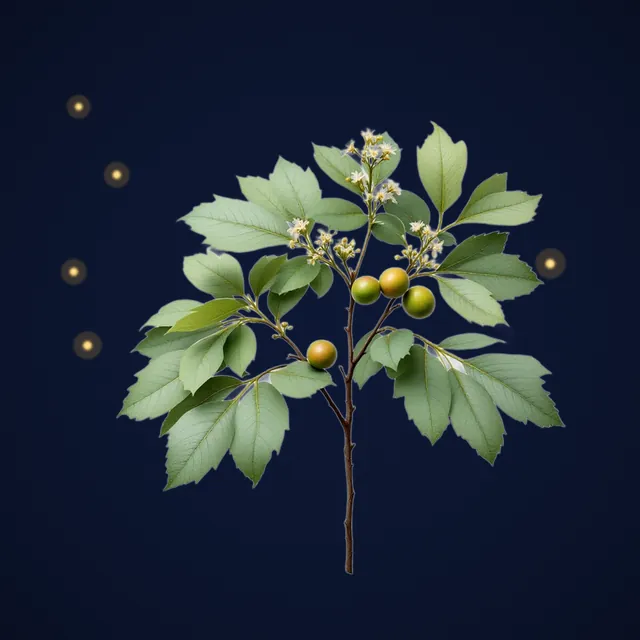
Kukui
Aleurites moluccanus (L.) Willd.
Polish folk names: orzech świecowy, kukui, kemiri, candlenut
Traditional use
[TRADITION] In Hawaii kukui oil was rubbed into the skin of babies and the sun-scorched skin of fishermen, and roasted, crushed nuts with salt make the ʻinamona seasoning. Raw nuts and the juice of the fruit were used as a strong laxative. The oily kernels were also burned like candles, hence the name “candlenut”.
What it looks like
A tree 15–25 m tall with a pale, silvery crown. Leaves large, often with 3–5 lobes, covered with a mealy bloom. Flowers small, white, in panicles. Fruit spherical, olive-green, 4–6 cm, with one or two seeds in a hard, grooved shell.
Harvest
Gathered: seeds (nuts), seed oil.
Form: oil (external), roasted nuts as a seasoning.
Lookalikes
- walnut – similar kernel, but kukui has a spherical, very hard, dark shell
- castor bean – also oily seeds with a laxative effect, far more dangerous
The information is educational and describes traditional use according to EMA/HMPC monographs (the European Medicines Agency and its Committee on Herbal Medicinal Products).It does not replace the advice of a doctor or pharmacist. Never eat a plant you are not 100% sure you recognise.