

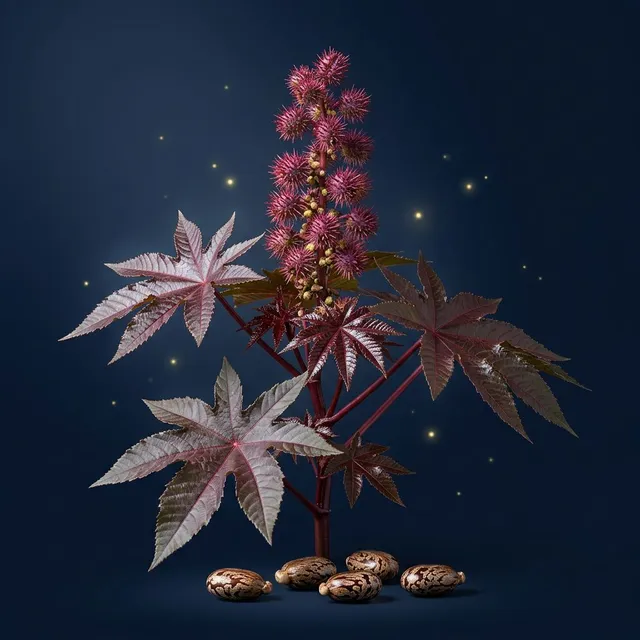
Castor bean
Ricinus communis L.
Polish folk names: rącznik, roślina rycynowa, krzew rycynowy
Symptoms of poisoning
After chewing and swallowing the seeds, usually after several hours (from 2 to 24): nausea, severe vomiting, abdominal pain and diarrhoea, often bloody, then dehydration, a drop in blood pressure and damage to the liver and kidneys. In children even a few seeds can be dangerous. Seeds swallowed whole often pass through the digestive tract without harm, but you must not count on that.
What it looks like
In our climate an annual plant 1–3 m tall, in the tropics tree-like. Leaves very large, palmate, with 5–11 toothed lobes, often reddish or brown-purple. Flowers in terminal racemes: the upper ones red and female, the lower ones yellowish and male. Fruits are spiny, red or green capsules with three bean-sized seeds, smooth and marbled with spots.
What it is sometimes confused with
- beans and ornamental seeds – the mottled castor seeds resemble beans or beads
- palm and other ornamental plants with palmate leaves – the castor oil plant is sometimes taken for an exotic houseplant
The information is educational and describes traditional use according to EMA/HMPC monographs (the European Medicines Agency and its Committee on Herbal Medicinal Products).It does not replace the advice of a doctor or pharmacist. Never eat a plant you are not 100% sure you recognise.