

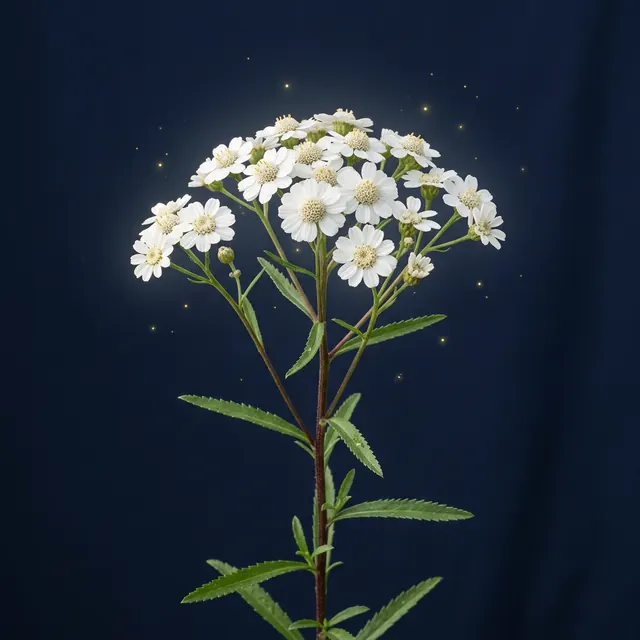
Sneezewort
Achillea ptarmica L.
Polish folk names: kichawiec
Traditional use
In folk medicine a decoction of the rhizome was regarded as carminative, diuretic, mildly laxative and pain-relieving; it was given for complaints of the kidneys and urinary tract, weakness and rheumatic pains. Chewing a leaf was meant to ease toothache, and the powdered herb to cause sneezing (hence the name). There is no EMA monograph, and there are no clinical studies.
What it looks like
Perennial 0.2–1 m tall with a long, creeping rhizome. Leaves sessile, narrow-lanceolate, up to 8.5 cm, with a doubly serrated margin – not pinnate as in common yarrow. Flower heads 12–17 mm with 8–13 white ray florets and a dirty-white centre, gathered in loose corymbs. Grows in damp meadows and by waters.
Harvest
Gathered: rhizome, leaf.
When: July – October.
Form: decoction of the rhizome.
Lookalikes
The information is educational and describes traditional use according to EMA/HMPC monographs (the European Medicines Agency and its Committee on Herbal Medicinal Products).It does not replace the advice of a doctor or pharmacist. Never eat a plant you are not 100% sure you recognise.