

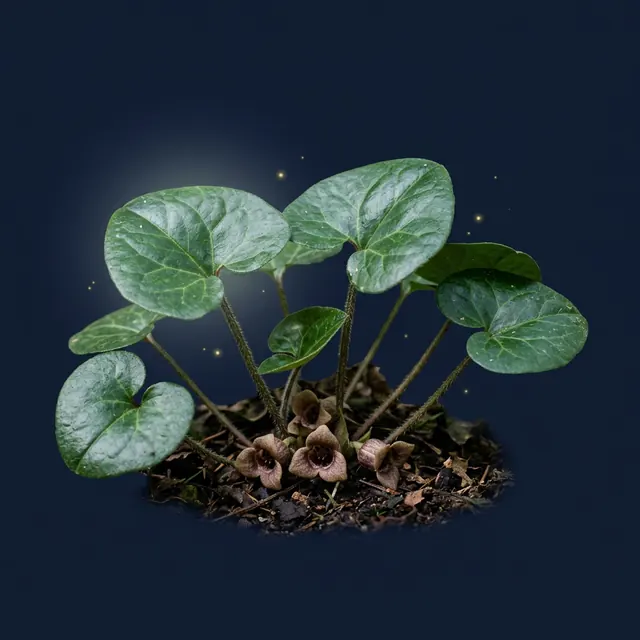
Asarabacca
Asarum europaeum L.
Polish folk names: kopyteń, nardus leśny, nard dziki, kleśniec, polska ipekuana
Symptoms of poisoning
Burning of the tongue and oesophagus, sneezing, abdominal pain, vomiting, inflammation of the intestines, bleeding from the uterus and miscarriage, weakness up to prostration.
What it looks like
Low, creeping perennial, 10–15 cm, evergreen. Leaves kidney-shaped, leathery, dark green and glossy, 5–8 cm wide, on long hairy stalks, usually 2 almost opposite each other. Flowers bell-shaped, fleshy, brownish-purple, hidden near the ground beneath the leaves. When crushed it has a peppery, sickly smell.
What it is sometimes confused with
- sweet violet (heart-shaped leaves in the forest)
- lesser celandine (shiny leaves)

The information is educational and describes traditional use according to EMA/HMPC monographs (the European Medicines Agency and its Committee on Herbal Medicinal Products).It does not replace the advice of a doctor or pharmacist. Never eat a plant you are not 100% sure you recognise.