

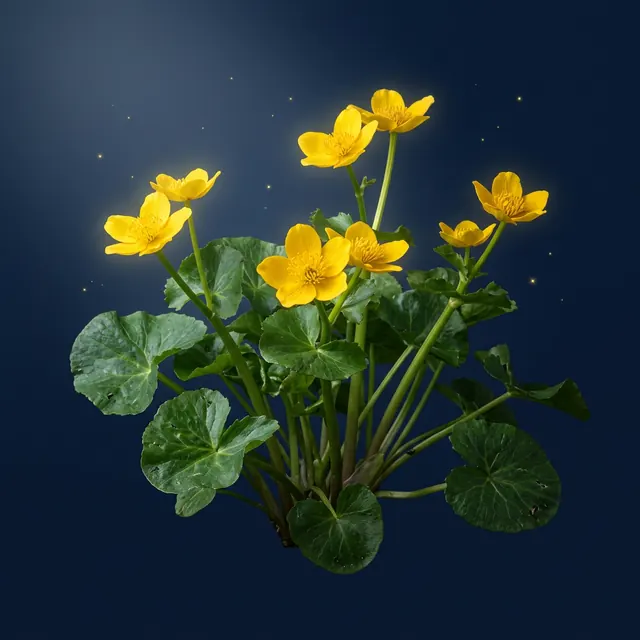
Marsh marigold
Caltha palustris L.
Polish folk names: kaczeniec
Symptoms of poisoning
Burning in the mouth, abdominal pain, vomiting, diarrhoea; the sap causes redness and blisters on the skin. In a described case from Korea, after eating the plant there was a slow pulse, low blood pressure and multi-organ failure ending in death.
What it looks like
Perennial of wetlands and waterside, up to 50 cm. Stem fleshy, hollow, hairless. Leaves kidney-shaped to rounded-heart-shaped, scalloped, dark green and glossy; the lower ones on long stalks. Flowers about 4 cm, with 5 intensely yellow, shiny tepals, blooming from March to May. The fruit is a cluster of 5–8 follicles.
What it is sometimes confused with
- edible leafy plants collected in spring by water (in Korea mistaken for Ligularia fischeri)
- buds collected as a caper substitute – raw they are poisonous
- lesser celandine (similar shiny leaves and yellow flowers)
The information is educational and describes traditional use according to EMA/HMPC monographs (the European Medicines Agency and its Committee on Herbal Medicinal Products).It does not replace the advice of a doctor or pharmacist. Never eat a plant you are not 100% sure you recognise.