

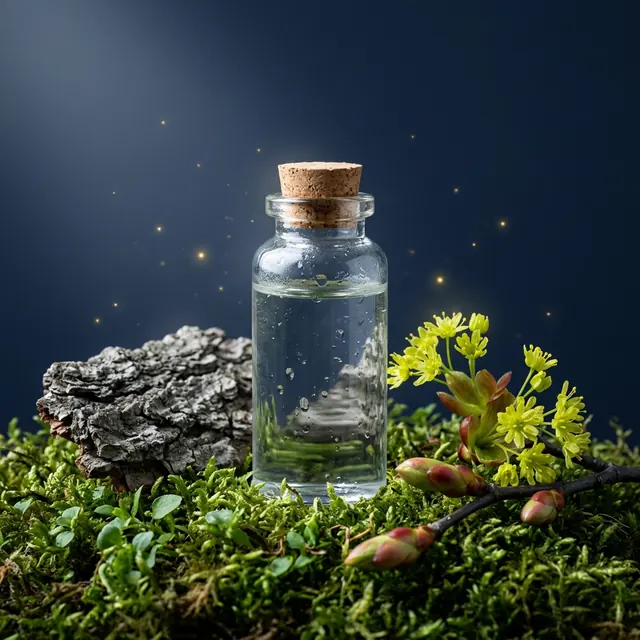
Maple sap
Acer platanoides L., Acer pseudoplatanus L. (sok)
Polish folk names: sok klonowy, woda klonowa
Traditional use
No EMA monograph. Polish maples (Norway maple and sycamore maple) give a spring sap similar to birch sap, only a little sweeter: it is mostly water with a little sugar (usually 1–3%, mainly sucrose) and mineral salts. It was drunk as a spring beverage, and after long boiling down it becomes a syrup, like that of the Canadian sugar maple. Treat it as a drink, not a medicine.
When the sap flows
Usually from mid-February to the end of March, when nights are frosty and days are above zero. When the maple starts to bloom and the buds burst, the sap turns bitter. That is the end of the season.
How to collect without harming the tree
- Choose a healthy tree with a trunk thicker than 25 cm.
- Drill one thin hole (8–10 mm, 2–4 cm deep), slightly upwards, and insert a clean tube leading into a bottle.
- Collect for at most a few days from one hole, then plug it with a wooden peg.
- Never cut the bark with an axe or all the way around the trunk.
How to store
- A few days in the fridge; for longer, freeze or pasteurise it.
- To make 1 litre of syrup you need to boil down about 40–80 litres of sap, depending on its sweetness.
What it looks like
A clear, watery liquid with a delicately sweet taste. It flows from Norway maple (leaves with pointed lobes, milky sap in the petiole) and sycamore (leaves with blunt lobes), usually in February and March, earlier than from birch.
Harvest
Gathered: juice.
When: February – March.
Form: fresh sap for drinking, syrop klonowy.
Lookalikes
- birch sap: flows later (March–April) and is less sweet
The information is educational and describes traditional use according to EMA/HMPC monographs (the European Medicines Agency and its Committee on Herbal Medicinal Products).It does not replace the advice of a doctor or pharmacist. Never eat a plant you are not 100% sure you recognise.