

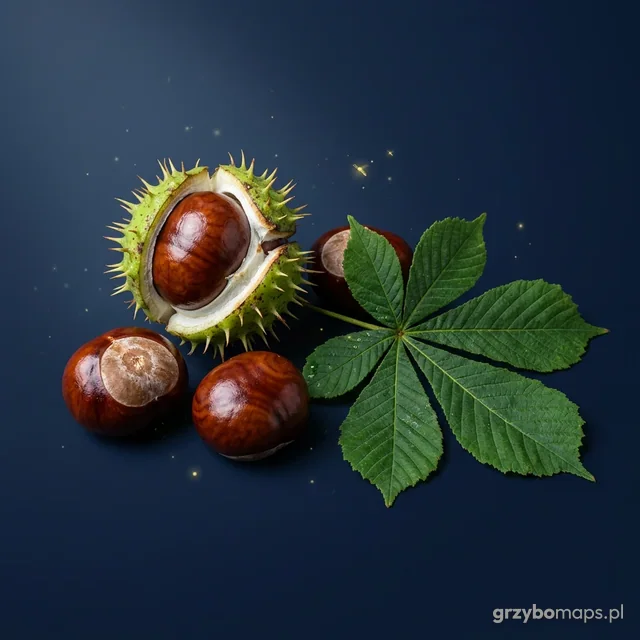
Horse chestnut
Aesculus hippocastanum L.
Polish folk names: kasztan, kasztan dziki
Traditional use
The EMA monographs concern standardised extracts from seeds (aescin) and bark in oral medicines: for chronic venous insufficiency (heavy, swollen legs), and, for the bark, also itching and burning in haemorrhoids. In a Cochrane review, the seed extract reduced leg pain and swelling in short studies. Home preparations made from horse chestnuts are suitable only for use on the skin.
What it looks like
A large tree with palmate leaves of 5–7 wedge-shaped leaflets. In May white candelabra of flowers with a yellow and red spot. In autumn green, spiny capsules with shiny brown seeds with a pale patch.
Harvest
Gathered: seeds, bark.
When: March, April, September, October.
Form: compress.
Lookalikes
- Sweet chestnut (Castanea sativa): spiny husk with dense needles, a single, long, toothed leaf – while horse chestnut has a palmate leaf with 5–7 leaflets
The information is educational and describes traditional use according to EMA/HMPC monographs (the European Medicines Agency and its Committee on Herbal Medicinal Products).It does not replace the advice of a doctor or pharmacist. Never eat a plant you are not 100% sure you recognise.