

Gypsywort
Lycopus europaeus L.
Traditional use
In folk medicine and old herbal medicine (the herb Herba Lycopi europaei) it was used for mild hyperthyroidism and its symptoms, such as palpitations, sweating and anxiety. There is no EMA monograph. In an open study from 2008, in people with mild hyperthyroidism an extract increased the excretion of the hormone T4 in the urine and reduced some symptoms (e.g. a fast morning pulse). This is too little to replace treatment. The leaves contain rosmarinic acid, which was antibacterial in the laboratory.
What it looks like
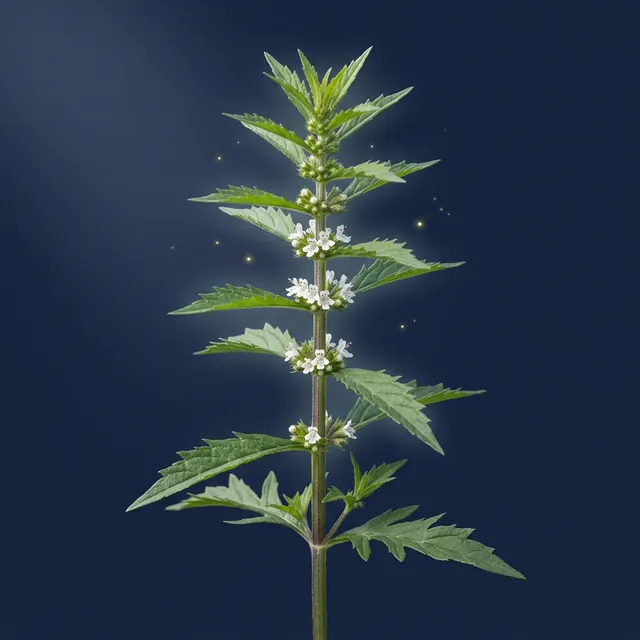
Perennial 30–80 cm tall, found by waters, with stolons and a four-angled stem. Leaves opposite, lanceolate to elliptic, coarsely and deeply toothed, often pinnately lobed at the base. Tiny white flowers 4–5 mm, spotted red, in dense whorls in the axils of the upper leaves. No minty smell.
Harvest
Gathered: herb (aerial parts).
When: July – September.
Form: infusion.
Lookalikes
- Lycopus exaltatus – all leaves deeply cut; rarer
- water mint – similar habitat, but a strong minty smell and lilac flowers in heads; harmless
- cowbane – grows in the same places by water, but has pinnate leaves and white umbels; deadly poisonous
The information is educational and describes traditional use according to EMA/HMPC monographs (the European Medicines Agency and its Committee on Herbal Medicinal Products).It does not replace the advice of a doctor or pharmacist. Never eat a plant you are not 100% sure you recognise.