

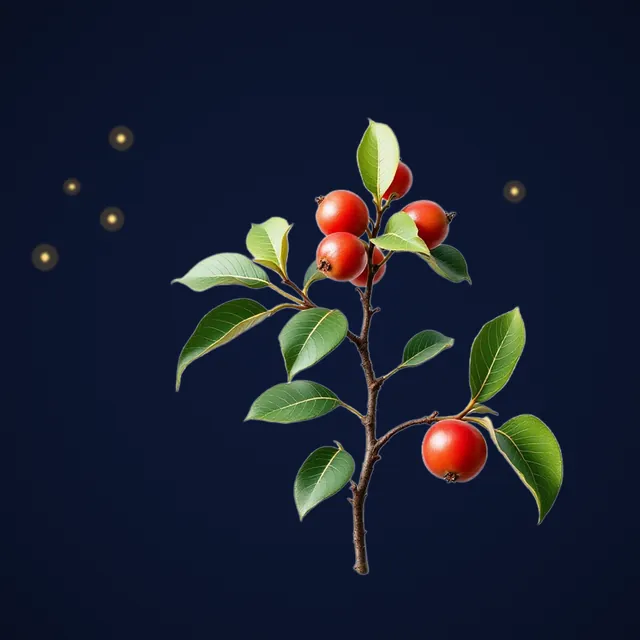
Jujube
Ziziphus jujuba Mill.
Polish folk names: chiński daktyl, dazao, jujuba
Traditional use
[TRADITION] Dried jujube fruits (dazao) are among the most common ingredients of Chinese recipes: they “harmonise” and sweeten herbal mixtures, and tradition ascribes to them strengthening and calming. For sleep, the seeds of a related variety (suanzaoren) are used. The fruits are simply tasty food, similar to dates. Clinical studies are small.
What it looks like
A thorny small tree 5–10 m tall with zigzag twigs. Leaves small, glossy, with three veins from the base. Flowers small, yellow-green. Fruit oval, first green, then red-brown and wrinkled, with one pointed stone.
Harvest
Gathered: fruits.
Form: decoction, dried fruit (food).
Lookalikes
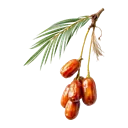
- date – the fruit of a palm, stone with a groove; the jujube grows on a thorny small tree
- Christ's thorn jujube (Ziziphus spina-christi) – a Middle Eastern relative with smaller fruits
The information is educational and describes traditional use according to EMA/HMPC monographs (the European Medicines Agency and its Committee on Herbal Medicinal Products).It does not replace the advice of a doctor or pharmacist. Never eat a plant you are not 100% sure you recognise.