

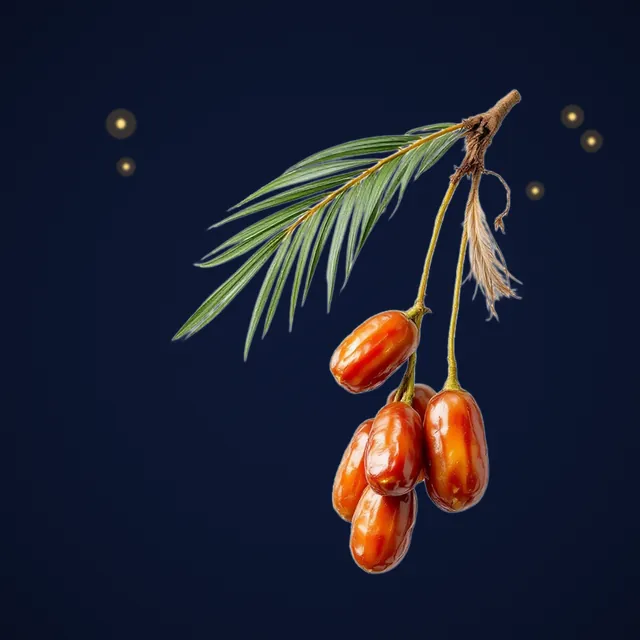
Date palm
Phoenix dactylifera L.
Polish folk names: palma daktylowa, daktyl, tamr
Traditional use
Dates have been a staple food of the Middle East and North Africa for six thousand years. Ancient Egyptian and Arabic recipes use them as a sweet carrier of medicines and as a remedy to soothe cough. Dried fruits contain a lot of sugars, fibre and potassium. A few small studies suggest that dates eaten late in pregnancy may shorten the first stage of labour, but the evidence is weak.
What it looks like
A palm up to 20–30 m with a trunk covered by the bases of old leaves. Leaves pinnate, bluish-green, up to 5 m, with spines at the base. A dioecious plant: only female trees bear fruit. Dates hang in heavy bunches, yellow or red, brown when ripe.
Harvest
Gathered: fruits.
Form: fruit (food), syrop daktylowy.
Lookalikes
- Canary Island date palm – an ornamental palm from our pots; fruits small and unpalatable
- jujube (“Chinese date”) – the fruit of a thorny small tree
The information is educational and describes traditional use according to EMA/HMPC monographs (the European Medicines Agency and its Committee on Herbal Medicinal Products).It does not replace the advice of a doctor or pharmacist. Never eat a plant you are not 100% sure you recognise.