

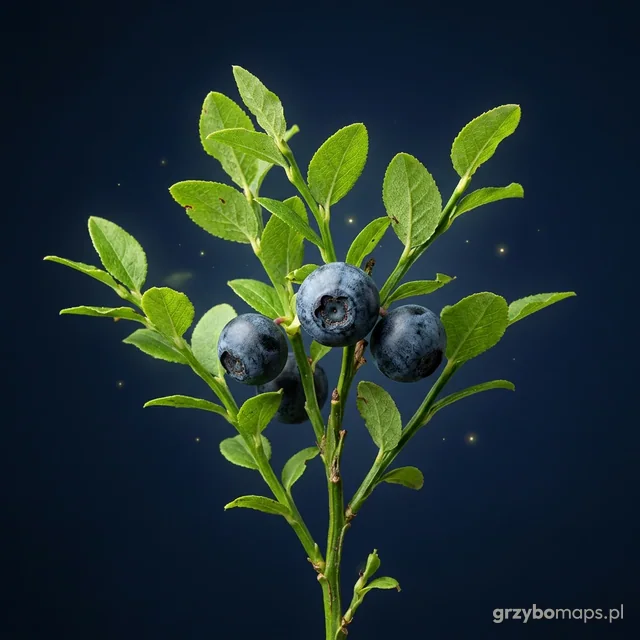
Bilberry – jagoda
Vaccinium myrtillus L.
Polish folk names: czarna jagoda, czernica
Traditional use
Traditionally (EMA/HMPC) dried fruit for mild diarrhoea and as a decoction for rinsing in mild inflammations of the oral mucosa. The effect is attributed to tannins.
What it looks like
A low forest subshrub (up to 40 cm) with angular green shoots and small, serrated leaves that fall in winter. Fruits blue-black with a bluish bloom, the flesh purple and staining.
Harvest
Gathered: fruit, leaf.
When: June – August.
Form: decoction, rinse.
Lookalikes
- Bog bilberry: fruit with greenish flesh, leaves bluish, entire-edged
- Herb Paris: a single black berry at the top of the stem above 4 leaves – poisonous
The information is educational and describes traditional use according to EMA/HMPC monographs (the European Medicines Agency and its Committee on Herbal Medicinal Products).It does not replace the advice of a doctor or pharmacist. Never eat a plant you are not 100% sure you recognise.