

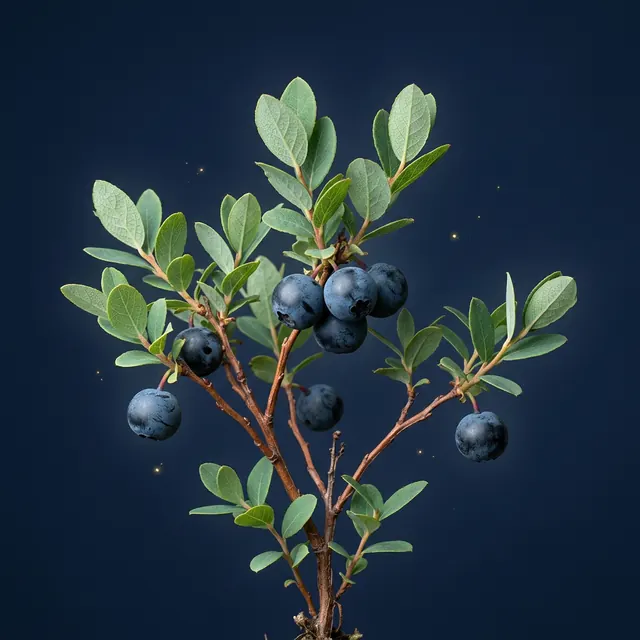
Bog bilberry
Vaccinium uliginosum L.
Polish folk names: pijanica, łochynia, włochina
Traditional use
No EMA monograph and no described medicinal tradition. The fruits are edible, but not very tasty; they contain vitamins, organic acids and anthocyanin pigments. A 2023 review of studies describes mainly laboratory experiments, so there is no strong evidence of a medicinal effect in humans. The name "pijanica" (drunkard) arose from the belief that the berries intoxicate. According to the sources, dizziness and vomiting after eating them are rather attributed to the pollen of the poisonous marsh Labrador tea growing nearby.
What it looks like
Dwarf shrub 15–80 cm tall with brown, rounded twigs. Leaves oval, small (up to 3 cm), blue-green, with a pale network of veins and a smooth margin. Flowers drooping, urn-shaped, white or pale pink. Fruits dark blue-black with a bluish bloom, 5–8 mm across, with white, sweetish flesh.
Harvest
Gathered: fruit.
When: July – September.
Form: kitchen (raw, jam, fruit kissel).
Lookalikes
- Bilberry - has green, angular twigs, serrated light-green leaves and purple, staining flesh; bog bilberry has brown twigs, bluish-green entire leaves and white flesh
- Marsh Labrador tea - a poisonous shrub of the same peat bogs; it has narrow leathery leaves with rusty felt underneath; it is protected
- Crowberry - black, glossy berries on a dwarf shrub with needle-like leaves
The information is educational and describes traditional use according to EMA/HMPC monographs (the European Medicines Agency and its Committee on Herbal Medicinal Products).It does not replace the advice of a doctor or pharmacist. Never eat a plant you are not 100% sure you recognise.