

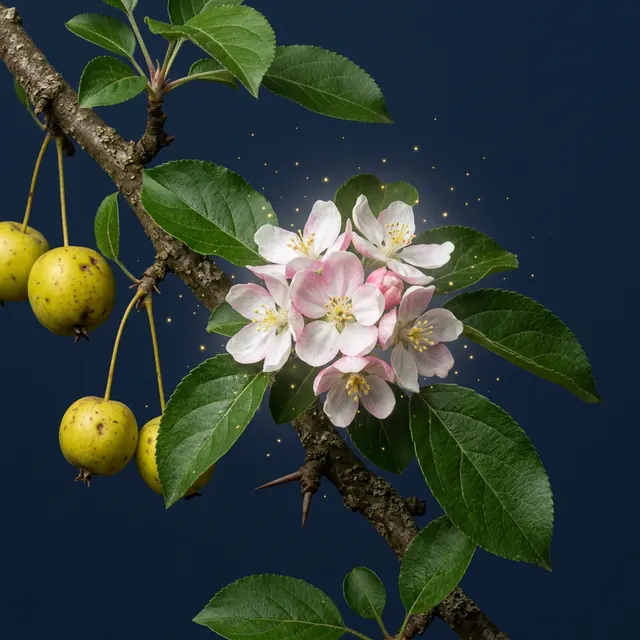
European crab apple
Malus sylvestris (L.) Mill.
Polish folk names: płonka, jabłoń płonka, jabłoń leśna
Traditional use
The fruits are edible, but hard, astringent and sour from malic and citric acid; the taste clearly improves after frosts. In the past the crab apple was also a medicinal plant and a rootstock for noble varieties. No EMA monograph – this is a fruit for the kitchen, not a medicine.
What it looks like
Small tree up to 10 m with a loose, rounded crown and a twisted trunk. Thorns on the short shoots of young trees. Leaves ovate, 3–6 cm, finely serrated, almost hairless beneath. Flowers white, tinged pink, 3–4 cm, with yellow anthers. Fruits globose, up to 3.5 cm, green to yellow-green, hard and sour, on long stalks.
Harvest
Gathered: fruit.
When: September – November.
Form: kitchen (after the frosts), dried herb.
Lookalikes
- feral domestic apple – shoots thick and without thorns, underside of the leaves clearly hairy, fruits larger; edible
- wild pear – anthers red, not yellow, leaves with a long stalk; edible
The information is educational and describes traditional use according to EMA/HMPC monographs (the European Medicines Agency and its Committee on Herbal Medicinal Products).It does not replace the advice of a doctor or pharmacist. Never eat a plant you are not 100% sure you recognise.