

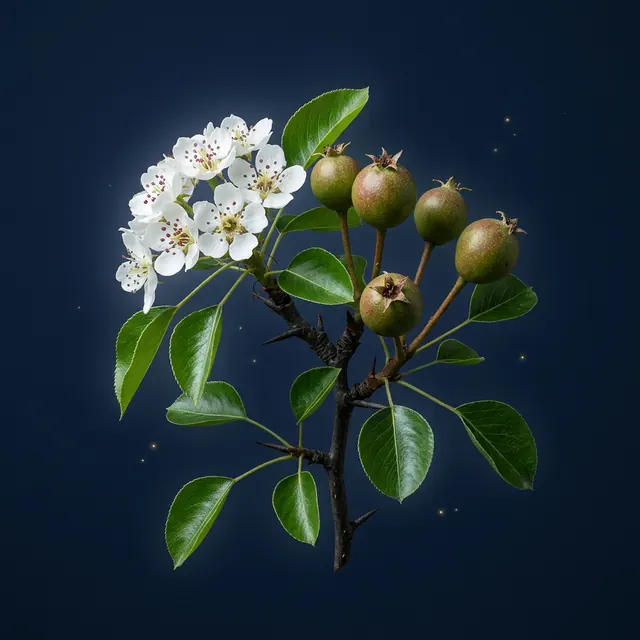
Wild pear – ulęgałka
Pyrus pyraster (L.) Burgsd. (syn. Pyrus communis subsp. pyraster)
Polish folk names: ulęgałka, grusza dzika
Traditional use
The fruits of wild pears, called ulęgałki, are hard, very astringent and full of stone cells; they are fit to eat only after lying for several weeks, when they soften and sweeten. Tinctures and spirits were also made from them. The wild pear is the ancestor of the cultivated pear. No EMA monograph – this is a fruit for the kitchen, not a medicine.
What it looks like
Tree up to 20 m or a shrub, with a slender crown and thorns on the twigs. Bark grey-black, cracked into rectangular plates. Leaves ovate, finely serrated, glossy, with a stalk almost as long as the blade. Flowers white, 5-petalled, with reddish anthers. Fruits 1–4 cm, pear-shaped or globose, green to yellow, hard and astringent.
Harvest
Gathered: fruit.
When: August – October.
Form: kitchen (after bletting), tincture.
Lookalikes
- feral cultivated pear – without thorns, fruits larger and sweeter; edible
- European crab apple – anthers yellow, fruits spherical; edible
The information is educational and describes traditional use according to EMA/HMPC monographs (the European Medicines Agency and its Committee on Herbal Medicinal Products).It does not replace the advice of a doctor or pharmacist. Never eat a plant you are not 100% sure you recognise.