

Haritaki
Terminalia chebula Retz.
Polish folk names: harad, myrobalan, król ziół (Tybet)
Traditional use
[TRADITION] In Ayurveda and Tibetan medicine haritaki is the “king of medicines”: the dried fruit is one of the three parts of the triphala powder. Traditionally it is used for constipation and to improve digestion. The fruit has a mild laxative effect and is strongly tannic. Clinical studies are small and mainly concern the whole mixture.
What it looks like
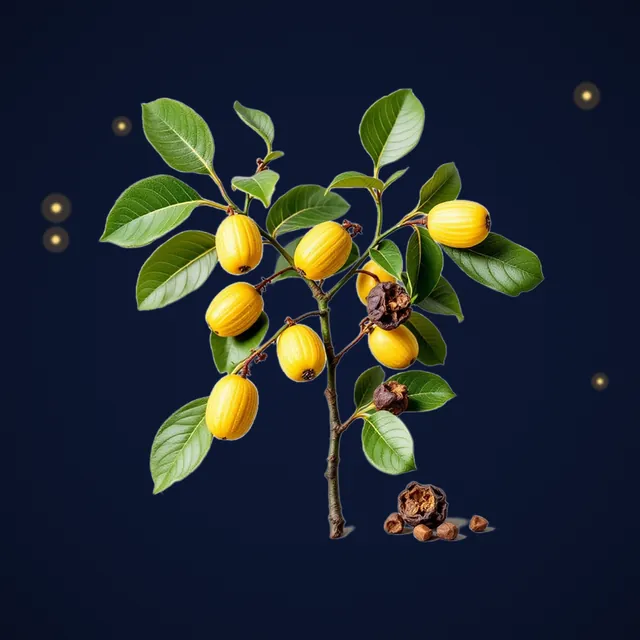
A tree up to 25–30 m. Leaves elliptic, with two small glands on the petiole just below the blade. Flowers small, yellowish-white, in spikes. Fruit egg-shaped, with five distinct ribs; when dried yellow-brown to black, hard and wrinkled.
Harvest
Gathered: fruits.
Form: powder, decoction.
Lookalikes
- bibhitaki (Terminalia bellirica) – velvety fruit with faint ribs
The information is educational and describes traditional use according to EMA/HMPC monographs (the European Medicines Agency and its Committee on Herbal Medicinal Products).It does not replace the advice of a doctor or pharmacist. Never eat a plant you are not 100% sure you recognise.