


Bibhitaki
Terminalia bellirica (Gaertn.) Roxb.
Polish folk names: bahera, vibhitaki, baleryka
Traditional use
[TRADITION] In Ayurveda the dried bibhitaki fruit is one of the three parts of the triphala powder, together with amla and haritaki. Tradition ascribes to it an effect on cough, throat and digestion. The fruit is strongly tannic and astringent. Clinical studies mainly concern the whole triphala mixture and are small.
What it looks like
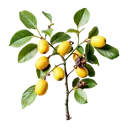
A large deciduous tree up to 30–40 m. Leaves broad, leathery, clustered at the ends of the branches. Flowers small, greenish, in spikes. Fruit egg-shaped, greyish-brown, velvety-hairy, with five faint ribs.
Harvest
Gathered: fruits.
Form: powder, decoction.
Lookalikes
- haritaki (Terminalia chebula) – fruit with five distinct ribs, hairless
The information is educational and describes traditional use according to EMA/HMPC monographs (the European Medicines Agency and its Committee on Herbal Medicinal Products).It does not replace the advice of a doctor or pharmacist. Never eat a plant you are not 100% sure you recognise.