

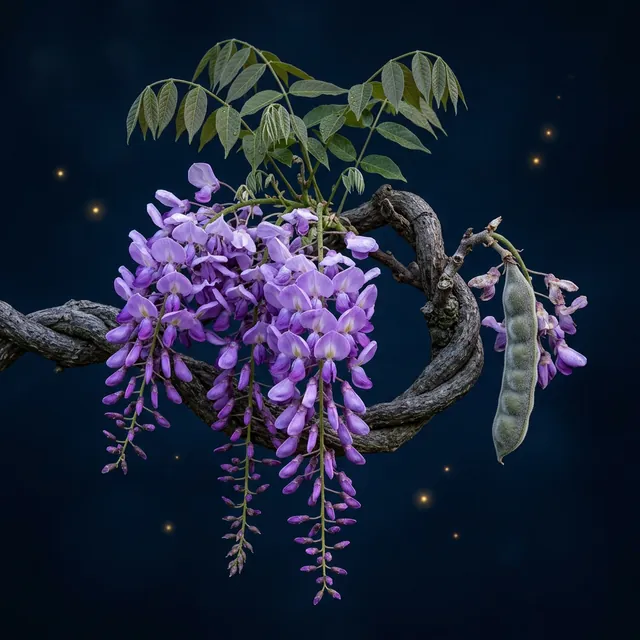
Chinese wisteria
Wisteria sinensis (Sims) DC. i glicynia kwiecista W. floribunda
Polish folk names: wisteria, glicynia
Symptoms of poisoning
After just a few seeds: nausea, repeated vomiting, abdominal pain, diarrhoea, dizziness. Children usually recover within a day, but severe vomiting can cause dehydration.
What it looks like
A strong, woody climber up to 10–20 m. Leaves odd-pinnate, with 7–13 leaflets. In May, long, drooping clusters of fragrant, pea-like flowers, purple or white. Pods up to 15 cm, velvety-hairy, with a few round seeds.
What it is sometimes confused with
- peas and beans – wisteria pods are velvety-hairy, hard and not for eating
- black locust – also has drooping white clusters and poisonous seeds
The information is educational and describes traditional use according to EMA/HMPC monographs (the European Medicines Agency and its Committee on Herbal Medicinal Products).It does not replace the advice of a doctor or pharmacist. Never eat a plant you are not 100% sure you recognise.