

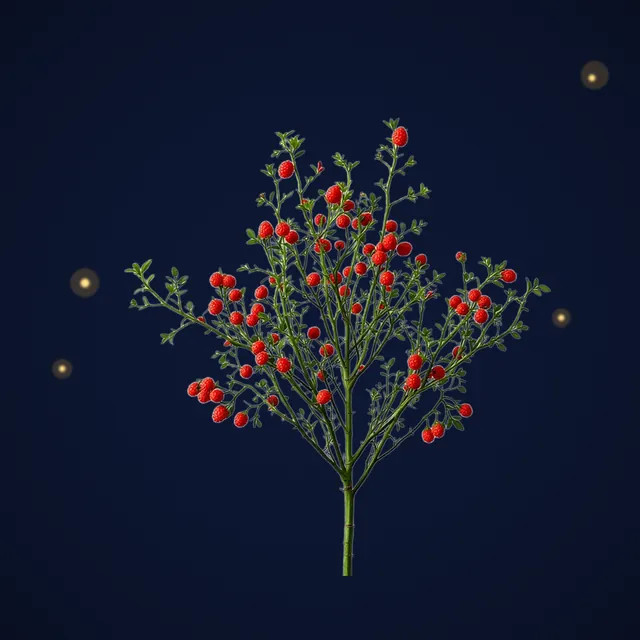
Chinese ephedra
Ephedra sinica Stapf
Polish folk names: efedra, ma huang, przęśl
Traditional use
Ma huang is one of the oldest herbs of Chinese medicine: the canon "Shennong Bencao Jing" recommends it for "wind and cold", cough and breathlessness. In 1885 ephedrine was isolated from it, and for decades it was a drug for asthma. In the recipes of old books we show ephedra only as a historical description. We describe the effects, risks and law in the Plants of Power section.
What it looks like
A low shrub 30–50 cm tall with thin, green, jointed shoots without visible leaves: at the nodes there are only tiny, membranous scales. A dioecious plant. On female specimens fleshy, red "berries" the size of a pea ripen.
Harvest
Gathered: green shoots.
Form: historical description (no recipe).
Lookalikes
- field and wood horsetail – similar jointed shoots, but horsetails have whorls of tiny teeth and grow in damp places
- joint pine (Ephedra distachya) – a European species of coasts and steppes
The information is educational and describes traditional use according to EMA/HMPC monographs (the European Medicines Agency and its Committee on Herbal Medicinal Products).It does not replace the advice of a doctor or pharmacist. Never eat a plant you are not 100% sure you recognise.